
Blogs
Blogs
Uncover patterns, developments, and feasible tactics for digital metamorphosis
Uncover patterns, developments, and feasible tactics for digital metamorphosis
search…

How a Unified Namespace Changes the Cost of Every Use Case
Aug 21, 2026
UNS
See how a Unified Namespace reduces repeated point-to-point integration and changes industrial digitalization economics across multiple use cases.
UNS
How a Unified Namespace Changes the Cost of Every Use Case
Aug 21, 2026
Tier0 vs Tulip: Composable MES, Reinvented - From Drag-and-Drop to AI-Generated UNS-Native Apps
May 27, 2026
Product
Tulip helped define composable MES. This article compares Tulip’s drag-and-drop application model with Tier0’s AI-generated, UNS-native approach to industrial application delivery.
Product
Tier0 vs Tulip: Composable MES, Reinvented - From Drag-and-Drop to AI-Generated UNS-Native Apps
May 27, 2026
Tier0 vs MQTT Brokers (EMQX, HiveMQ): Why a Broker Is Necessary But Not Sufficient
May 26, 2026
Product
MQTT brokers are the backbone of real-time industrial messaging. This article explains why a complete Unified Namespace also needs semantic modeling, persistence, analytics, and application generation.
Product
Tier0 vs MQTT Brokers (EMQX, HiveMQ): Why a Broker Is Necessary But Not Sufficient
May 26, 2026
Tier0 vs Ignition: Two Paradigms - SCADA Engineering vs UNS + Natural-Language Generation
May 25, 2026
Product
Ignition and Tier0 represent different industrial software paradigms. This article compares SCADA engineering with Tier0’s UNS foundation and natural-language application generation.
Product
Tier0 vs Ignition: Two Paradigms - SCADA Engineering vs UNS + Natural-Language Generation
May 25, 2026
Tier0 vs United Manufacturing Hub: Open-Source Infrastructure or Productized UNS Application Delivery?
May 22, 2026
Product
Tier0 and United Manufacturing Hub share open industrial data ideas, but they package value differently. This article compares UMH as open-source infrastructure with Tier0 as a productized UNS platform for application delivery.
Product
Tier0 vs United Manufacturing Hub: Open-Source Infrastructure or Productized UNS Application Delivery?
May 22, 2026
Tier0 vs HighByte: Industrial DataOps Component or Full-Stack UNS Platform with AI-Generated Apps?
May 21, 2026
Product
Tier0 and HighByte both support UNS initiatives, but they solve different parts of the stack. This article compares HighByte's Industrial DataOps focus with Tier0's full-stack UNS foundation and AI-generated application layer.
Product
Tier0 vs HighByte: Industrial DataOps Component or Full-Stack UNS Platform with AI-Generated Apps?
May 21, 2026
The Full-Stack UNS Platform: From Data Foundation to UNS-Native Applications
May 20, 2026
UNS
Learn how Tier0 helps manufacturers build a shared UNS foundation and generate industrial applications that reuse the same semantic model instead of creating new data silos.
UNS
The Full-Stack UNS Platform: From Data Foundation to UNS-Native Applications
May 20, 2026
Tier0 × EMQX: Building a Real-Time Data Foundation for Industrial AI
May 19, 2026
Partner
How EMQX and Tier0 help manufacturers move from point-to-point integrations to a real-time Unified Namespace for industrial applications and AI-enabled operations.
Partner
Tier0 × EMQX: Building a Real-Time Data Foundation for Industrial AI
May 19, 2026
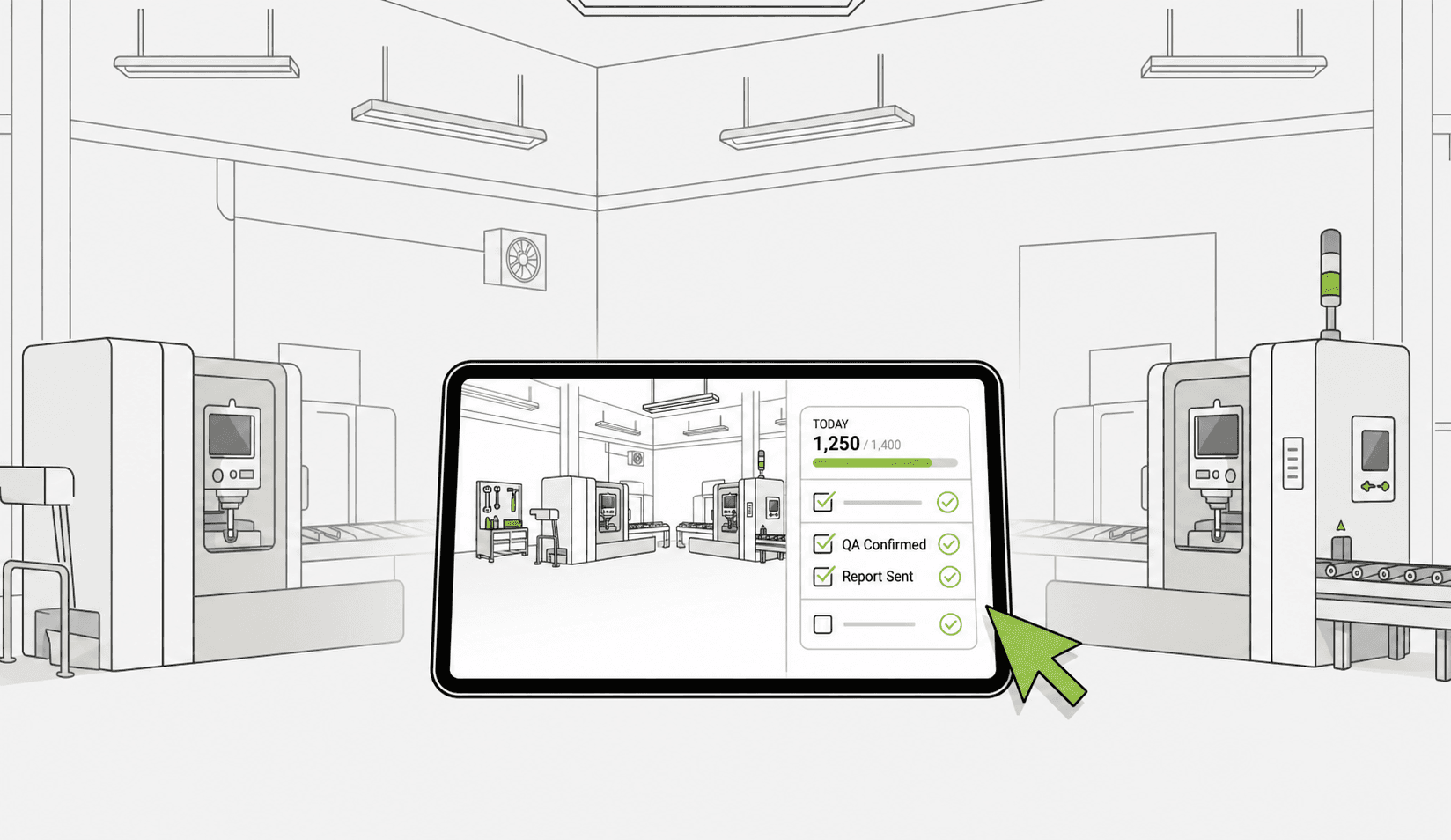
What is Lightweight Digitalization?
May 8, 2026
Use Cases
Lightweight digitalization focuses on improving operations one practical workflow at a time rather than launching massive transformation programs. By starting with one high-value use case, manufacturers can prove value quickly and expand without the high cost and risk of traditional IT projects.
Use Cases
What is Lightweight Digitalization?
May 8, 2026
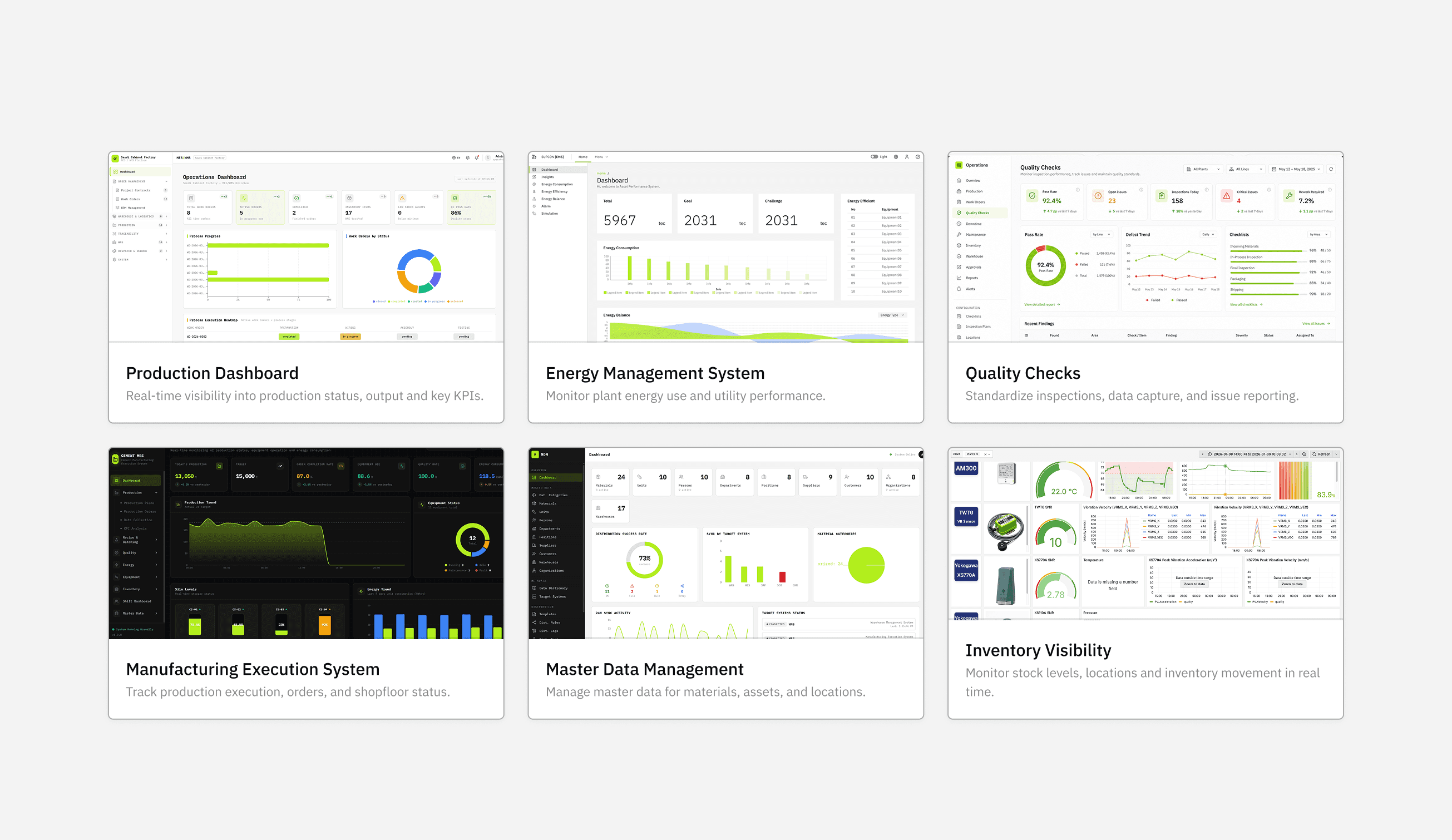
What is an Industrial App Platform?
May 7, 2026
Product
An industrial app platform consists of reusable building blocks used to build and manage targeted operational apps—like production reporting or shift handovers—without the overhead of monolithic systems. It enables manufacturers to digitize specific workflows in weeks instead of months.
Product
What is an Industrial App Platform?
May 7, 2026
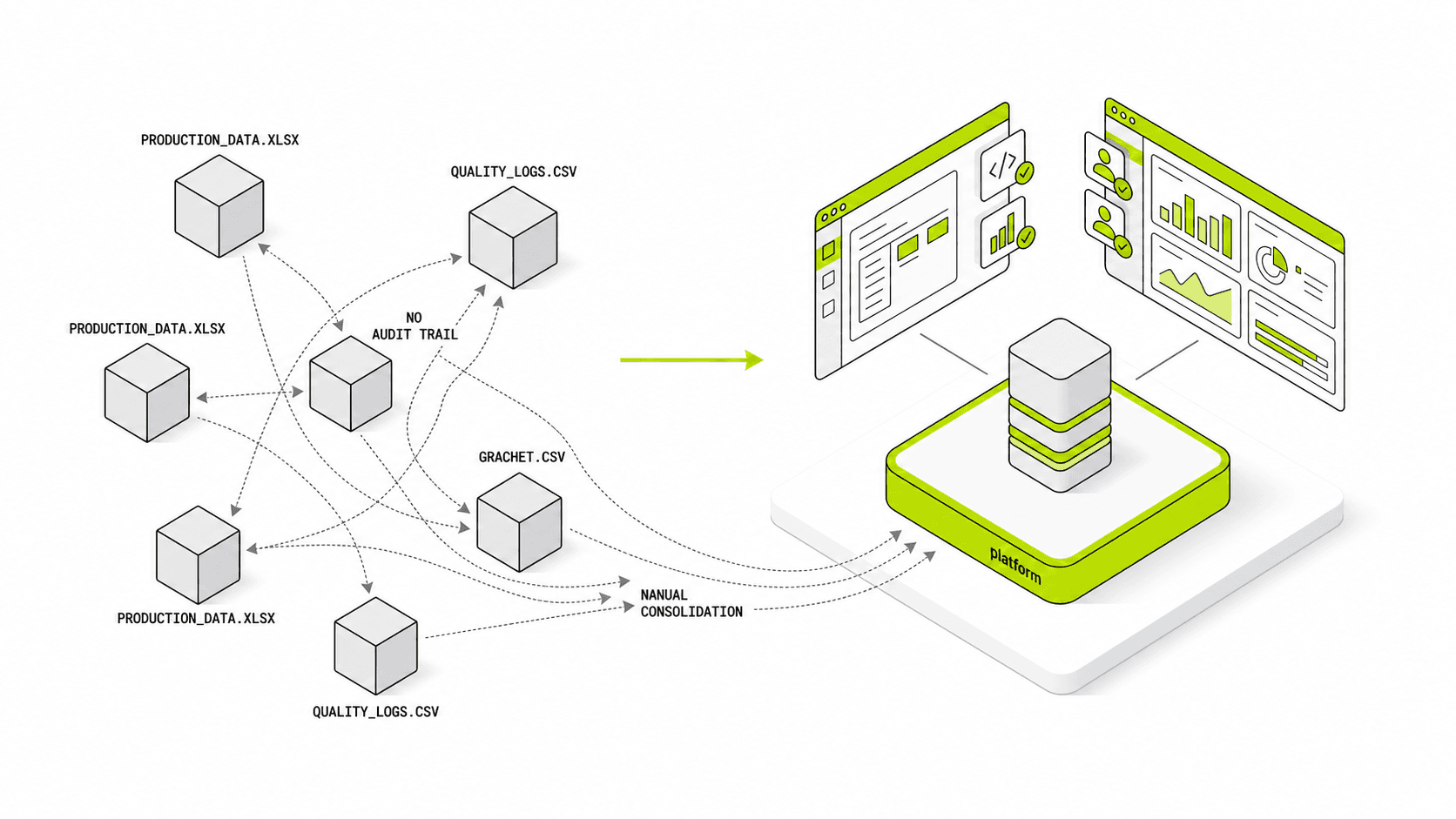
From Excel to System: What Changes?
May 7, 2026
Use Cases
Moving from Excel to a structured system shifts a factory from manual, unverified recording to governed, real-time process control. Unlike spreadsheets, a structured system provides automated audit trails, role-based access, and data that can be reused across multiple applications.
Use Cases
From Excel to System: What Changes?
May 7, 2026
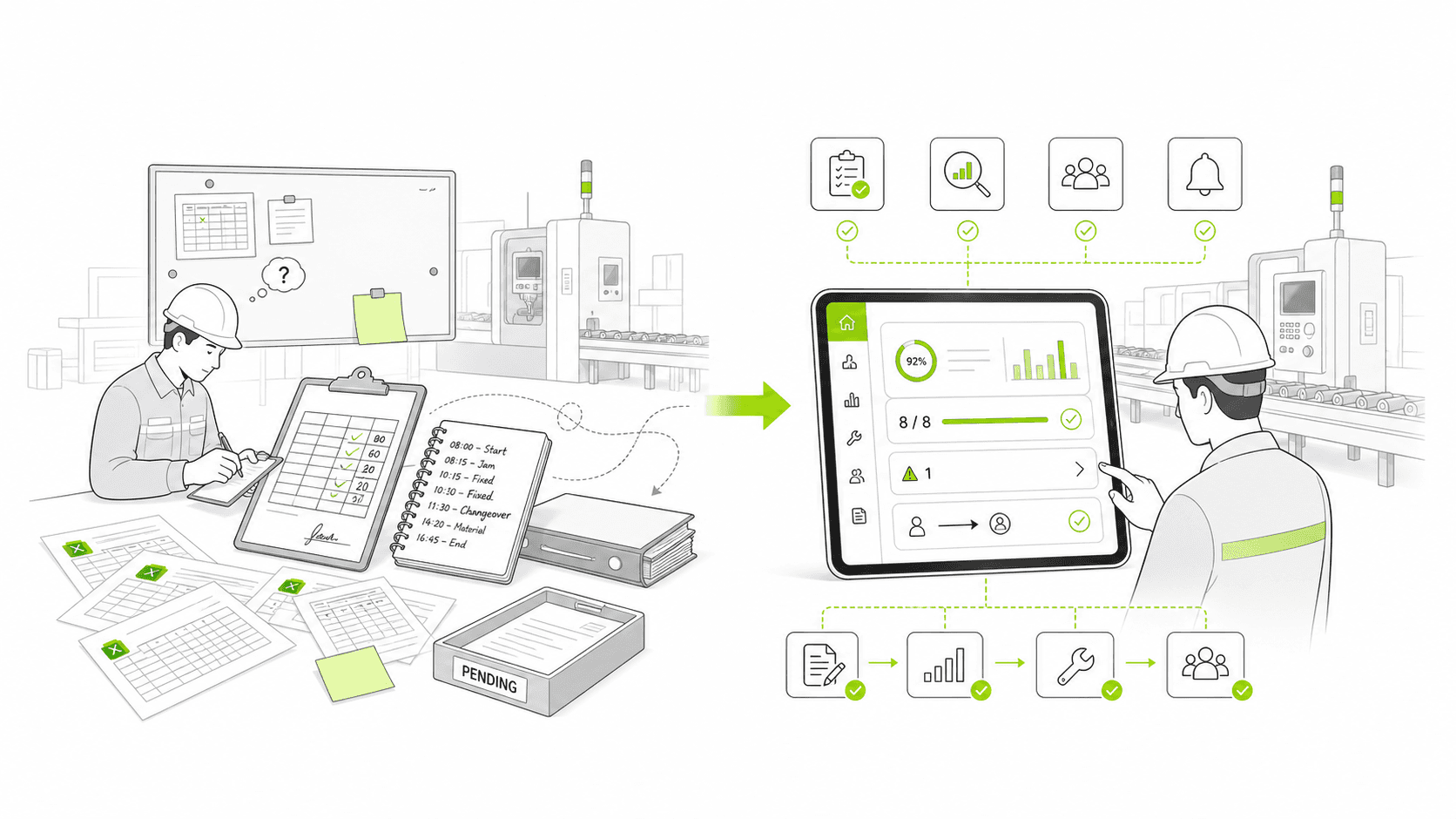
What is Shopfloor Digitalization?
May 7, 2026
Use Cases
Shopfloor digitalization is the practical act of digitizing daily frontline tasks, such as inspection checklists and downtime logging. It replaces paper and spreadsheets with structured data capture, giving supervisors instant visibility and reducing the manual effort of chasing updates.
Use Cases
What is Shopfloor Digitalization?
May 7, 2026
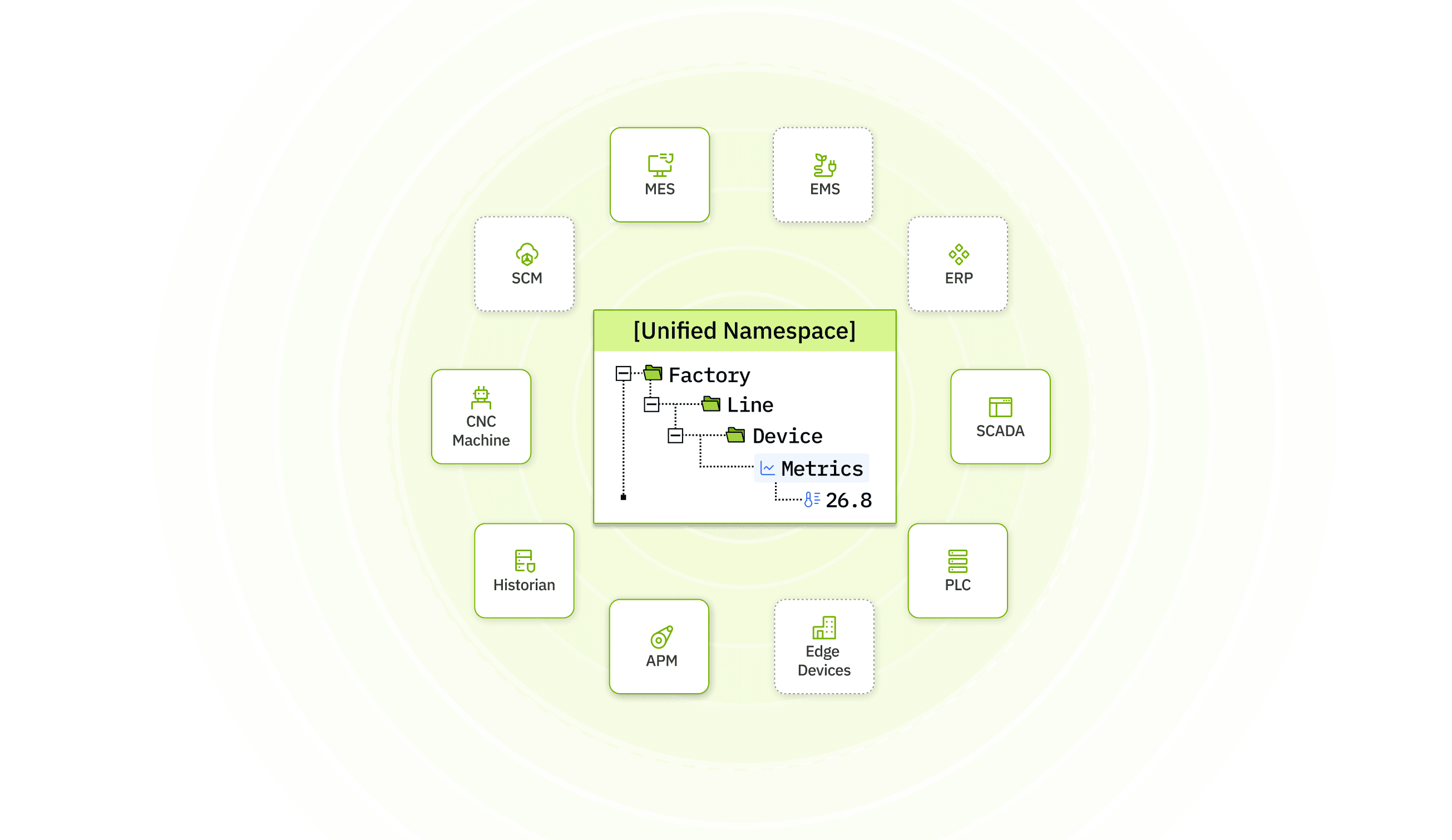
What is Unified Namespace (UNS)?
May 6, 2026
UNS
A Unified Namespace (UNS) is a centralized data architecture where all industrial systems publish and subscribe to data through a single, structured layer. It replaces messy point-to-point connections with a reusable data foundation, allowing information to flow seamlessly across the entire factory.
UNS
What is Unified Namespace (UNS)?
May 6, 2026
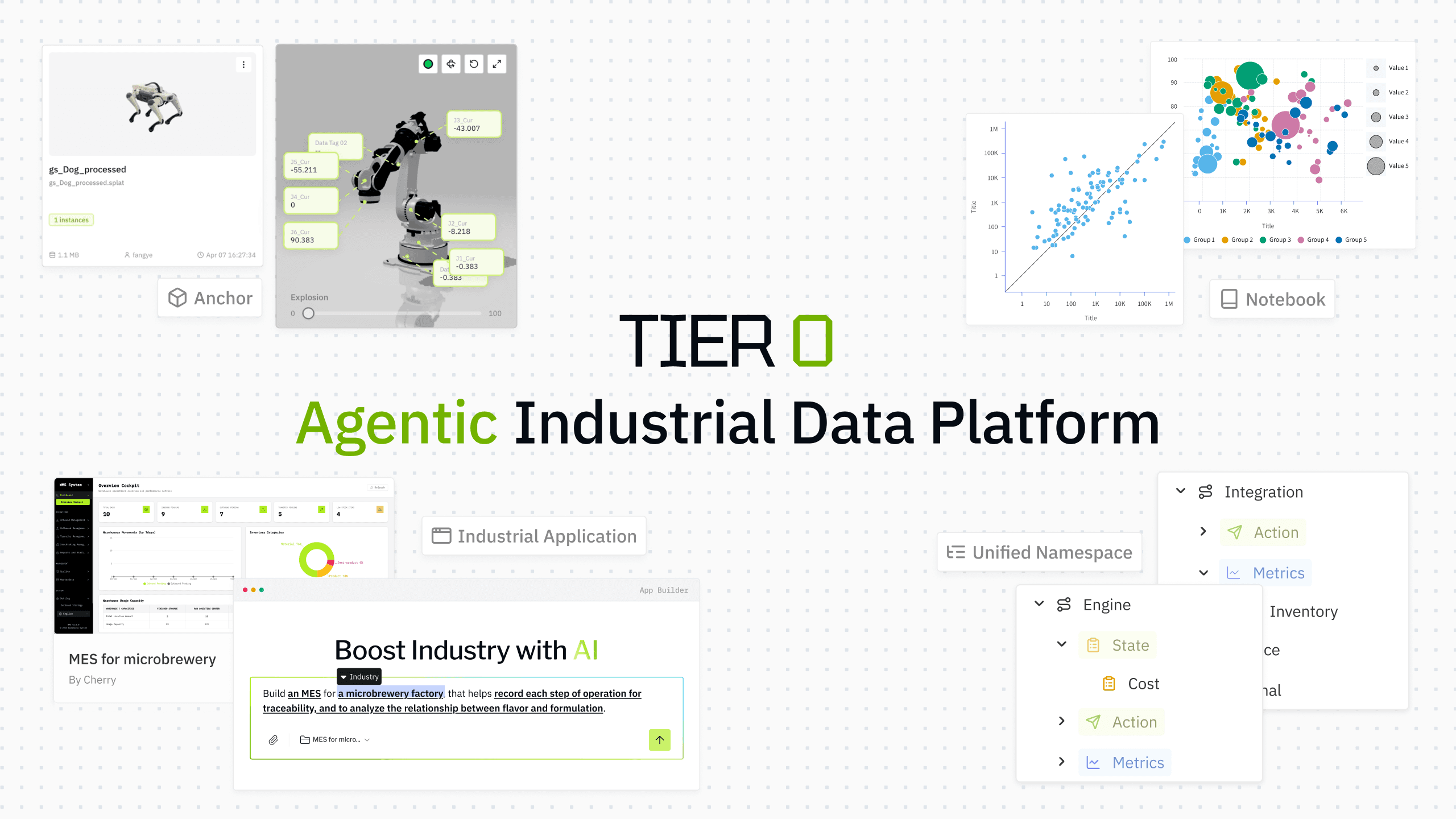
Reinventing Industrial Software
Apr 18, 2026
AI
AI coding agents can accelerate software development, but industrial applications need more than generated code. This article explains why reliable industrial software requires trusted templates, operational data foundations, validation pipelines, and a clear path from natural-language intent to production-ready applications.
AI
Reinventing Industrial Software
Apr 18, 2026

UNS – The Sole Key to Industrial Digitalization
Oct 10, 2024
UNS
This article explores whether the Unified Namespace (UNS) is the ultimate solution for industrial transformation. It examines how a UNS provides the necessary real-time data structure to break down silos, while also highlighting that true digitalization requires a balance of architecture, practical application tools, and strong data governance.
UNS
UNS – The Sole Key to Industrial Digitalization
Oct 10, 2024

Lightweight Multimodal Models for Edge-Based Defect Detection
Sep 23, 2024
AI
This article discusses the use of lightweight multimodal models to enhance defect detection at the edge. By combining visual data with other sensor inputs (like vibration or sound), manufacturers can achieve higher accuracy and faster response times directly on the shop floor without relying on heavy cloud computing.
AI
Lightweight Multimodal Models for Edge-Based Defect Detection
Sep 23, 2024

Discrete-Event Simulation + Reinforcement Learning
Sep 9, 2024
AI
Learn how combining Discrete Event Simulation (DES) with Reinforcement Learning (RL) can optimize complex industrial processes. This approach allows systems to simulate various scenarios and "learn" the most efficient operational strategies, leading to smarter decision-making in dynamic manufacturing environments.
AI
Discrete-Event Simulation + Reinforcement Learning
Sep 9, 2024
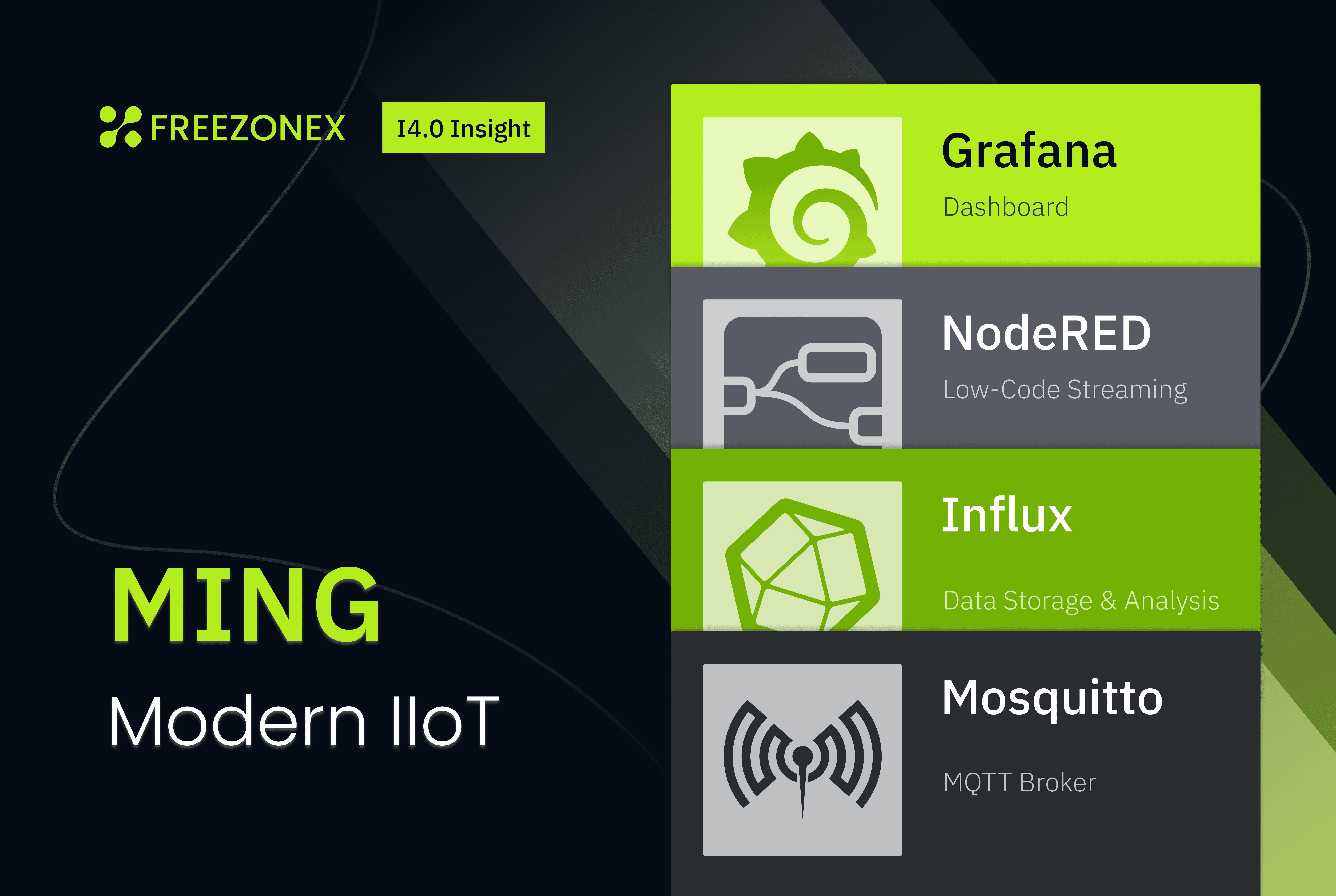
MING & Modern IIoT
Aug 21, 2024
Integration
This post introduces MING, a modern stack for Industrial IoT. It explains how integrating modern technologies (like MQTT, InfluxDB, and Grafana) creates a scalable and flexible architecture that helps manufacturers collect, store, and visualize data more effectively than traditional legacy systems.
Integration
MING & Modern IIoT
Aug 21, 2024

Revolutionize Industrial Data Integration: The UNS Approach
Feb 7, 2024
UNS
This article deep dives into the Unified Namespace (UNS) approach as the new standard for industrial data management. It focuses on how a single, consistent naming convention and hierarchical structure can simplify integration and make real-time data accessible across the entire enterprise.
UNS
Revolutionize Industrial Data Integration: The UNS Approach
Feb 7, 2024
STAY UP TO DATE WITH PRODUCT UPDATES, LEARNING RESOURCES, AND MORE.
solutions
STAY UP TO DATE WITH PRODUCT UPDATES, LEARNING RESOURCES, AND MORE.
solutions
STAY UP TO DATE WITH PRODUCT UPDATES, LEARNING RESOURCES, AND MORE.
solutions