The Full-Stack UNS Platform: From Data Foundation to UNS-Native Applications
UNS
3 minutes
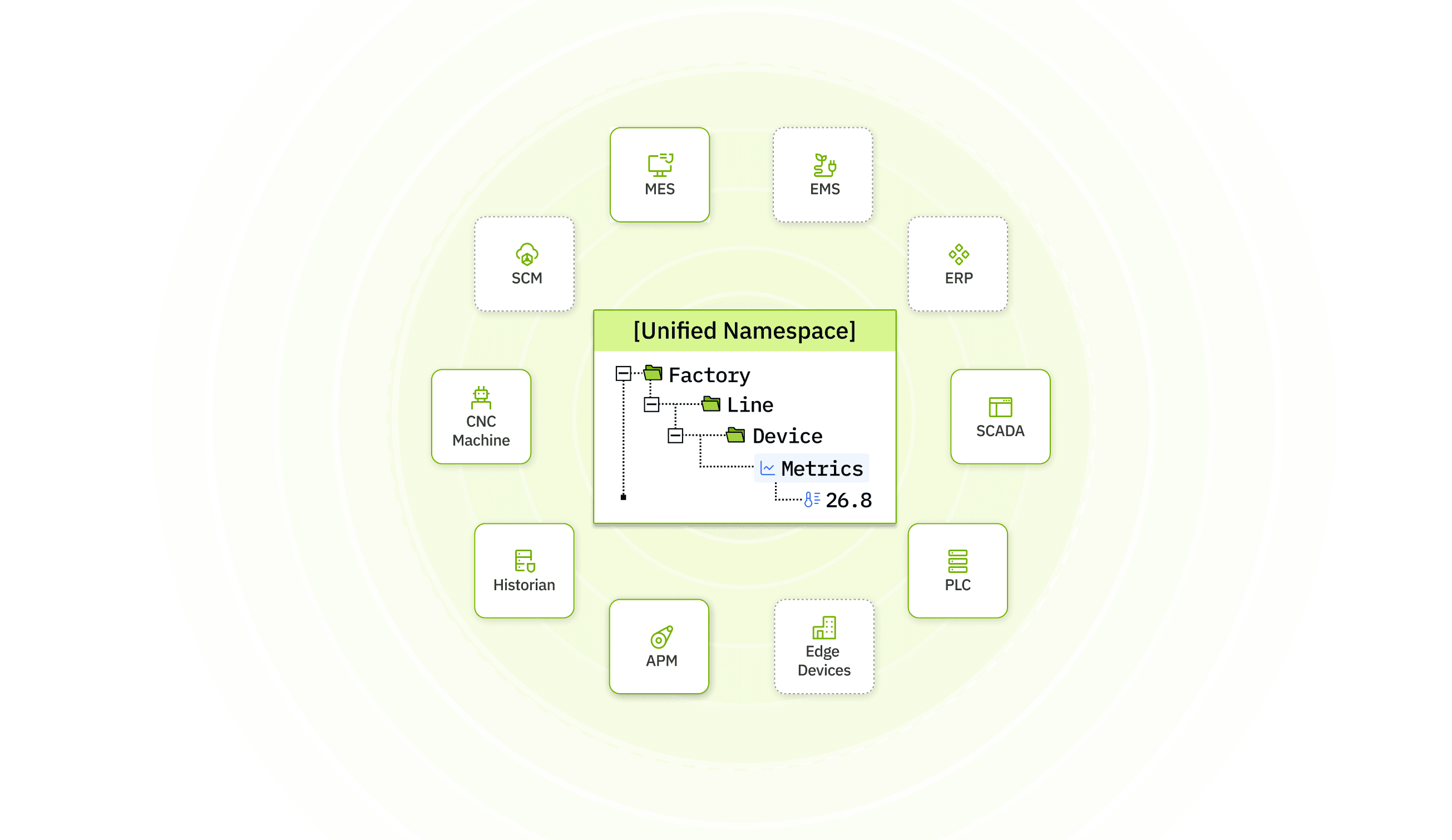
A Unified Namespace (UNS) is not a single product. It is an industrial data architecture that organizes operational data into a shared, real-time, semantic structure. A working UNS needs more than a broker or a topic hierarchy. It needs semantic modeling, data acquisition, event processing, real-time distribution, persistence, analytics, and applications that reuse the same data foundation.
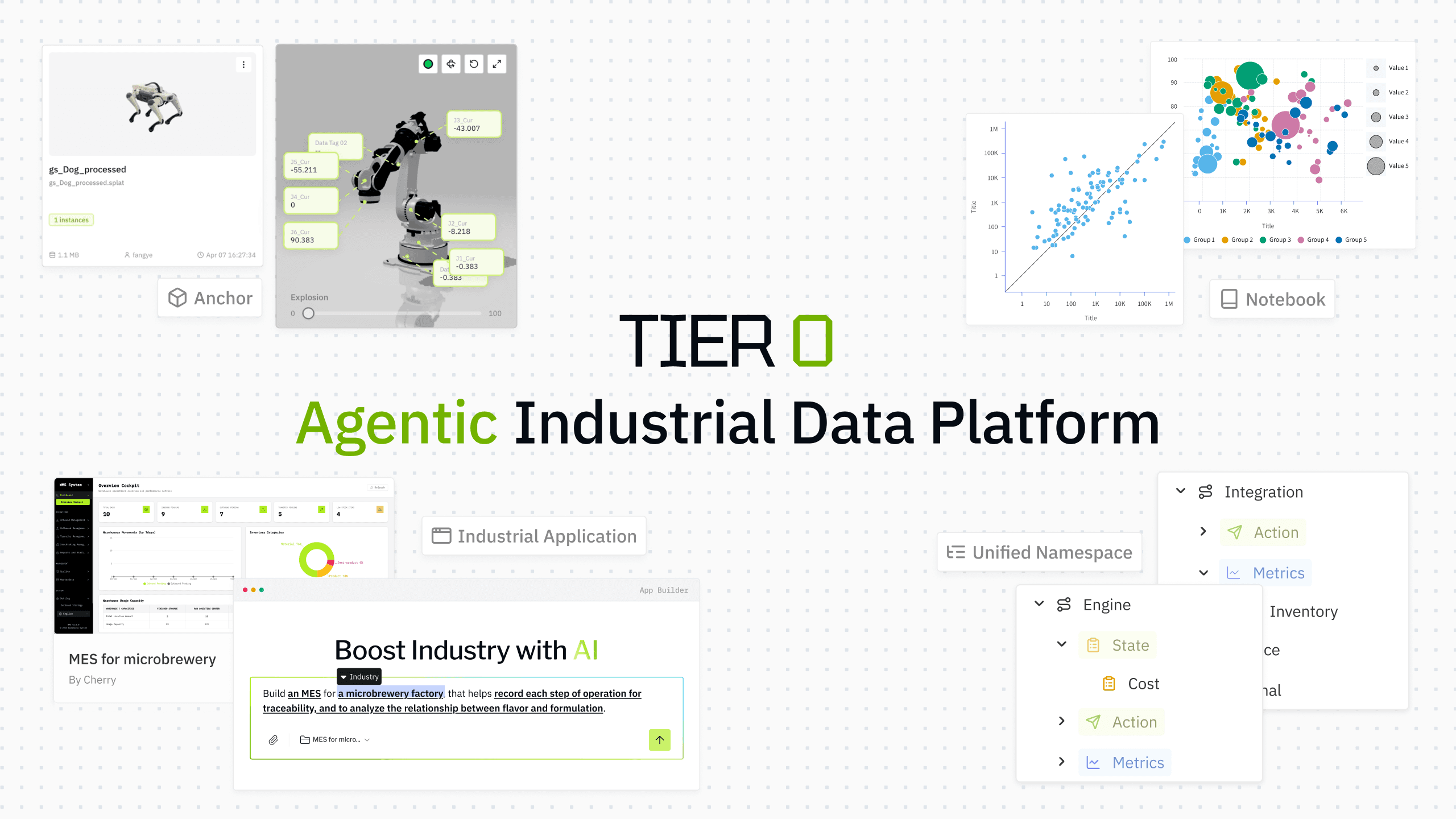
Tier0 is a full-stack UNS-based industrial data and application platform. It builds the UNS foundation through Namespace, SourceFlow, EventFlow, and time-series persistence, then reuses that foundation through Notebook for analytics and App Builder for LLM-driven generation of UNS-native applications. Tier0 is built on a backbone of open-source technologies (Node-RED, EMQX, TimescaleDB, and Marimo Notebook), but presented to customers as integrated Tier0 product modules rather than a collection of components to assemble.
Integrated platform vs assembled stack
UNS capability | Typical assembled stack | Tier0 module |
Semantic modeling (ISA-95, UNS hierarchy) | HighByte, UMH, or custom modeling layer | Namespace |
Data acquisition (PLC, sensors, databases, APIs, OPC UA, Modbus) | Kepware, Litmus, Ignition Edge, vendor gateways | SourceFlow |
Event processing, routing, and real-time MQTT distribution | Separate flow tool, rules engine, plus HiveMQ / EMQX / Mosquitto | EventFlow |
Time-series persistence (historian) | InfluxDB, TimescaleDB, OSIsoft PI, AVEVA | Time-series persistence |
Analytics and notebooks | Jupyter, Streamlit, external BI tools | Notebook |
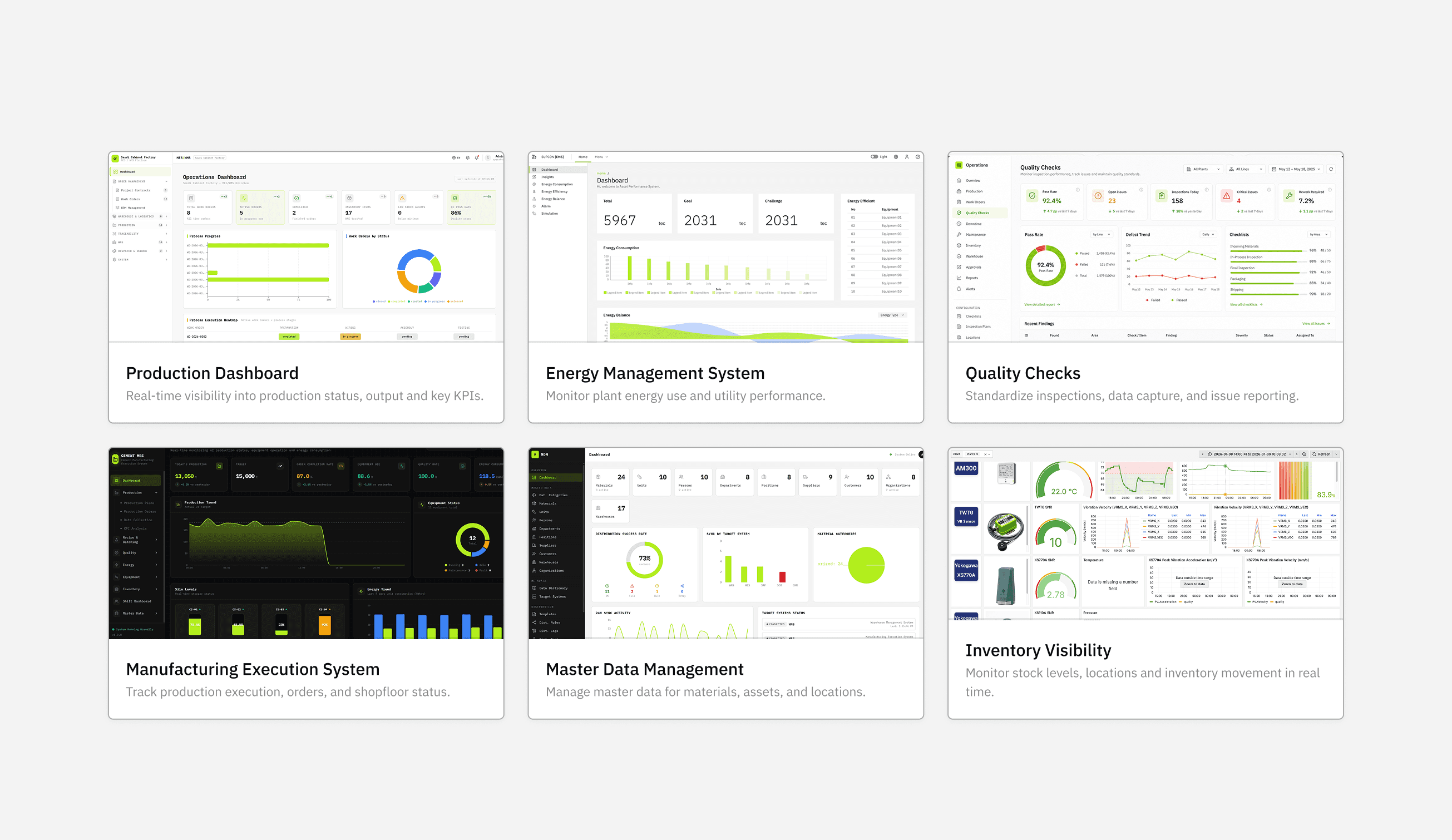
Application delivery (MES, WMS, dashboards, workflows) | Custom development, low-code platforms, SCADA-engineered apps | App Builder (LLM natural-language generation) |
Why integration matters
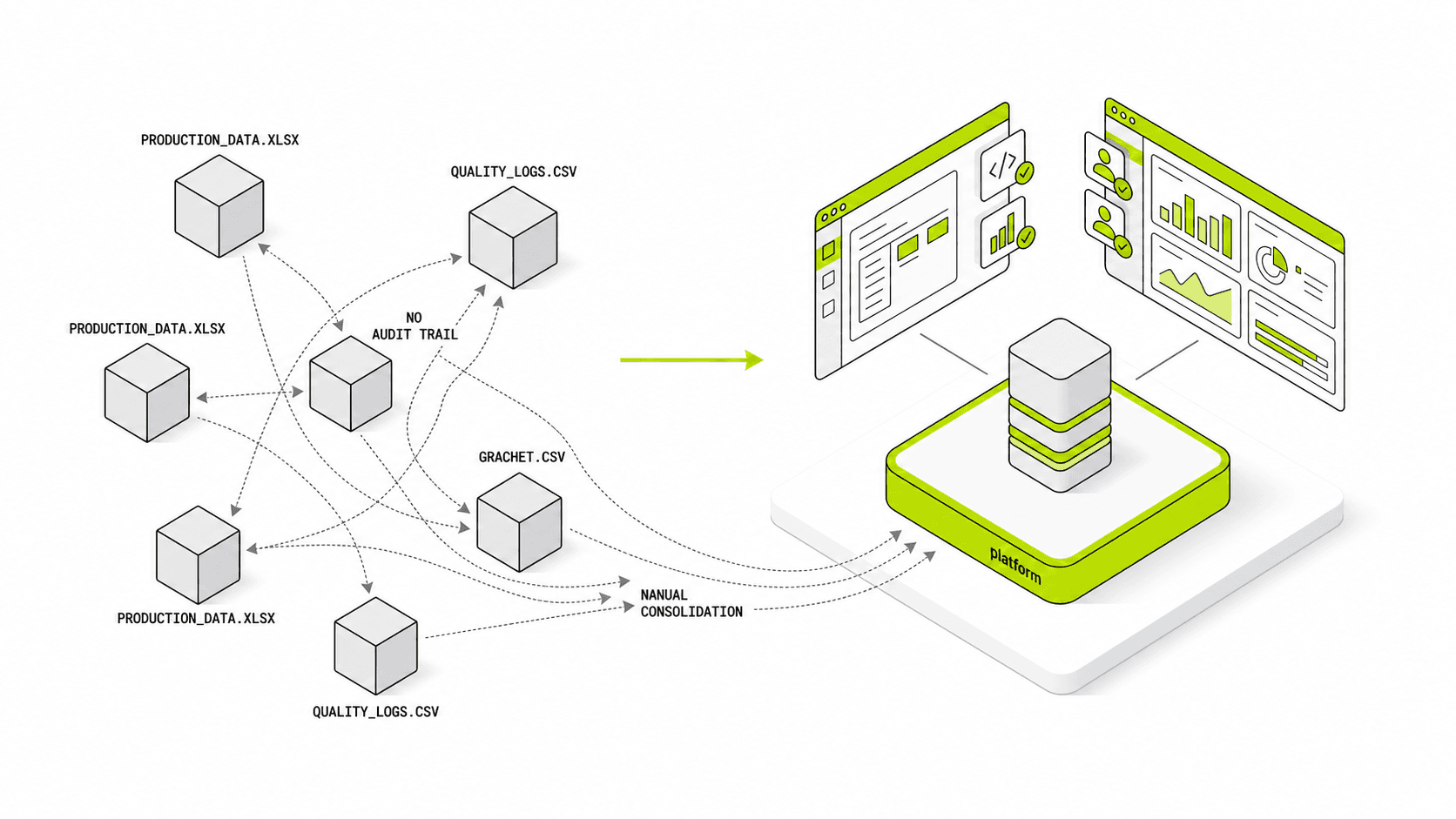
An assembled UNS can work, but it asks the buyer to integrate, secure, version, and operate six to eight independent products before the first business application ever ships. Each layer becomes a separate procurement, security review, upgrade path, and skill set. Even after the data architecture is assembled, the team still needs to build applications that consume the namespace correctly and write back to it without drift.
Tier0 compresses this timeline by productizing the UNS foundation and the application generation workflow together. Teams can start from connected, modeled, distributed, and persisted UNS data on day one, then use natural language to generate applications that reuse the same semantic model. The team that builds those applications does not need to be a specialized OT or IT engineering team. Any engineer who works with the factory's processes, applications, and data can describe what they need and let App Builder generate it.
UNS-native applications by design
Tier0 applications are designed to be UNS-native. They read from the Namespace, write operational results back to the Namespace, and inherit the same semantic model as every other Tier0 application. Two applications built six months apart, by two different engineers, share the same definition of “work order,” “equipment,” and “downtime.”
This is the structural difference between Tier0 and most application platforms — including AI-assisted ones. Most application generators produce standalone apps backed by their own internal data models. Each new app becomes a new data silo. Tier0 generates applications that are extensions of the UNS itself. New apps are designed not to create new silos; they enrich the namespace.
Anti-silo by design: every Tier0 application reads from and writes to the same Namespace, so the platform is designed to become more consistent — not more fragmented — with every new application.
Buyer recommendation
Buyers evaluating UNS should ask two questions. First: do we want to assemble a UNS stack from independent components, or use an integrated platform where the data foundation, analytics, and application generation share one operating model? Second: when we build applications on top of the UNS, will those applications share a single semantic model, or will each one become a new silo? Tier0's design point is integrated and UNS-native on both questions.