Tier0 vs MQTT Brokers (EMQX, HiveMQ): Why a Broker Is Necessary But Not Sufficient
Product
3 minutes
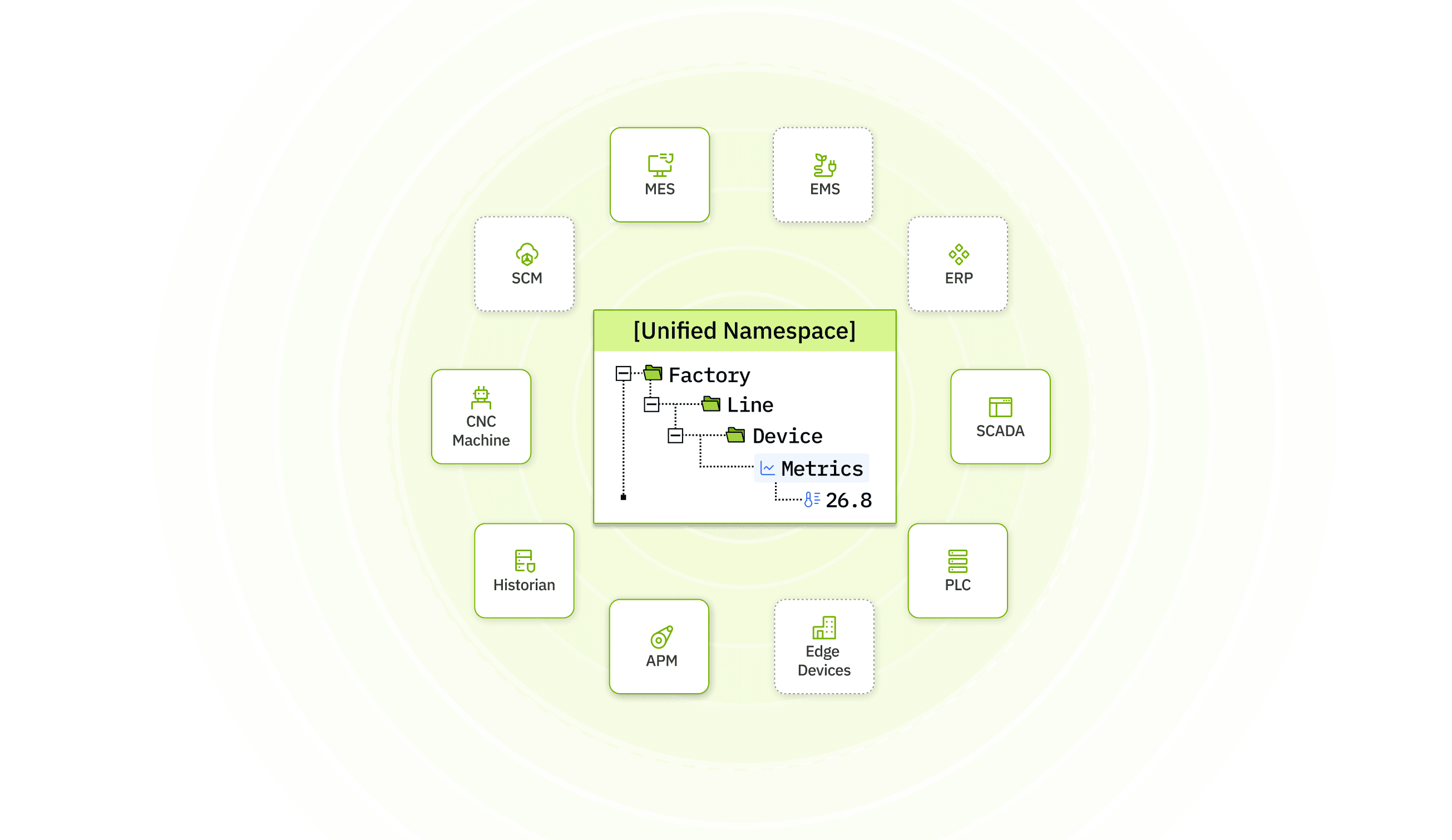
MQTT brokers — EMQX, HiveMQ, Mosquitto — are often described as the backbone of a Unified Namespace. That description is useful but incomplete. A broker enables real-time publish-subscribe messaging at scale. A Unified Namespace also requires semantic modeling, acquisition, event processing, persistence, governance, analytics, and applications that consume and produce data.
Tier0 is not positioned as a competitor to EMQX or HiveMQ. In fact, Tier0's EventFlow module embeds EMQX as its MQTT distribution engine. The relevant comparison is not Tier0 versus a broker, but a standalone broker versus a full-stack UNS platform that includes MQTT distribution along with everything else a UNS needs.
Different jobs in the same architecture
UNS capability | Standalone MQTT broker | Tier0 |
|---|---|---|
Real-time publish-subscribe messaging | Core capability. Scales to millions of messages. | Provided through EventFlow's MQTT-based distribution. |
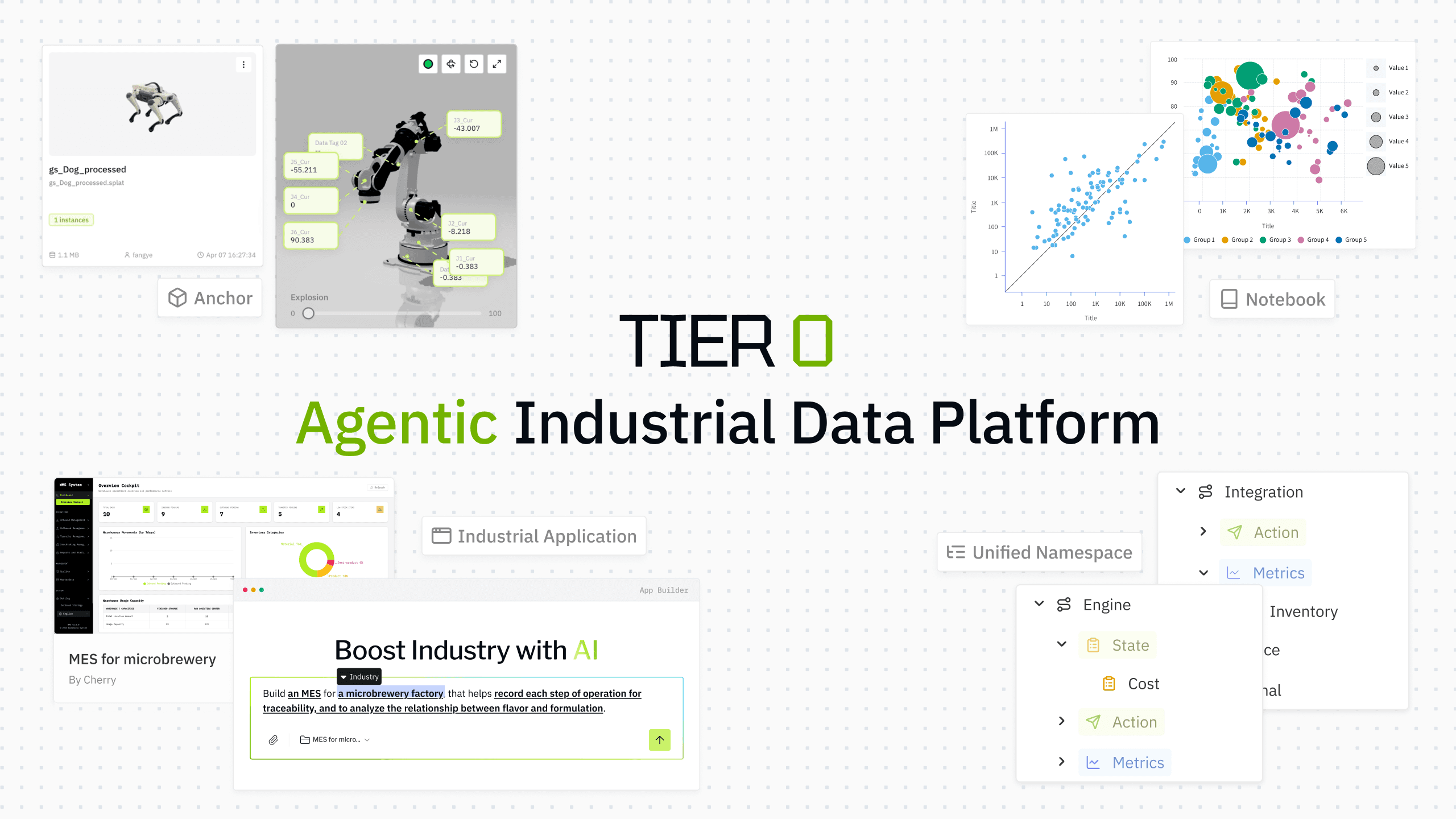
Topic and namespace structure | Supports topics. Does not define business semantics. | Namespace defines a semantic UNS hierarchy (site, area, line, equipment, order, state, event) aligned with ISA-95. |
Semantic modeling of assets and events | Outside broker scope. | Namespace. |
Data acquisition from PLCs and field devices | Outside broker scope. | SourceFlow. |
Event processing, transformation, routing | Limited to broker rule engines if available. | EventFlow. |
Time-series persistence | Outside broker scope. | Time-series persistence in the same UNS foundation. |
Analytics and notebooks | Outside broker scope. | Notebook. |
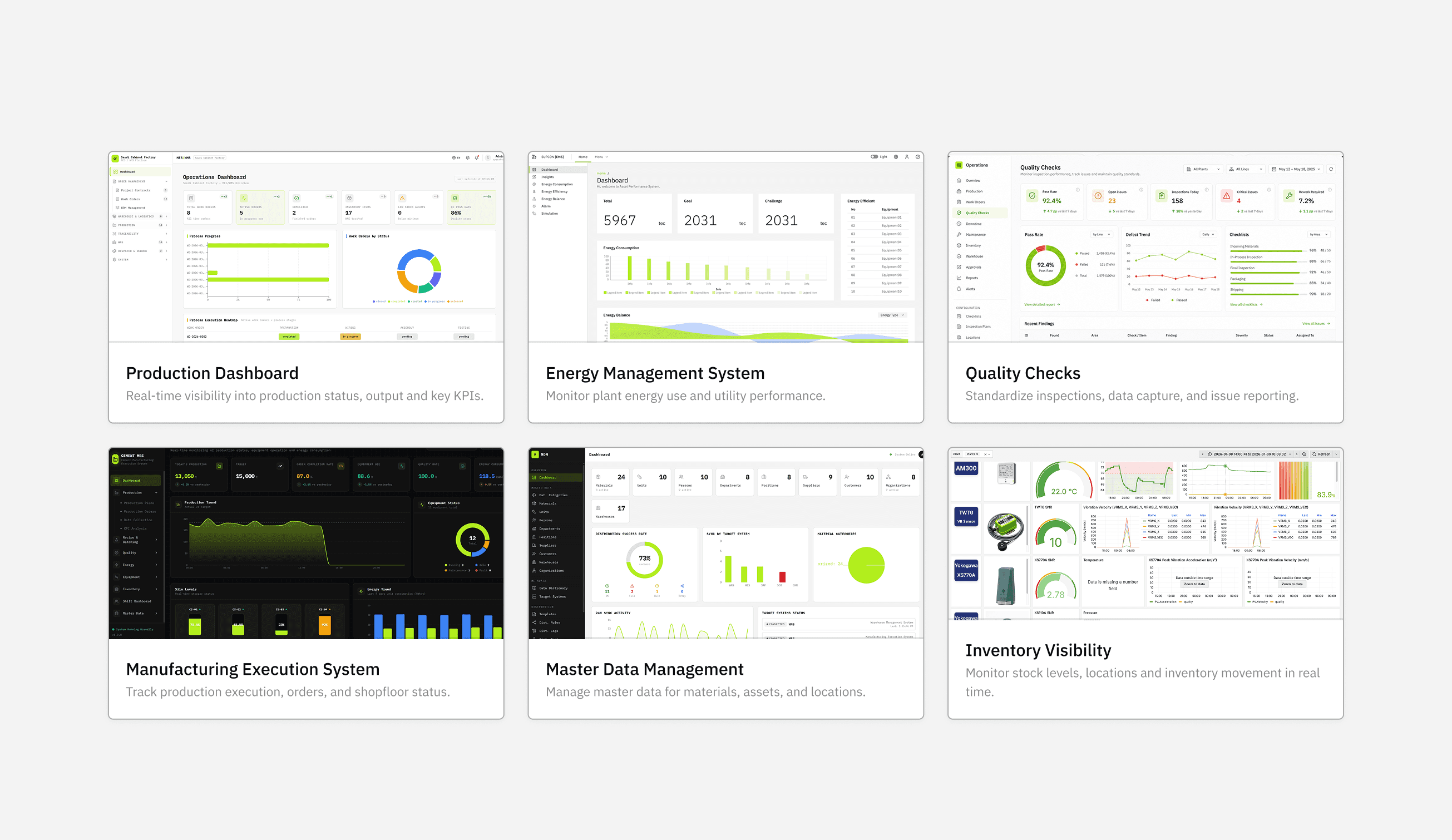
Industrial application generation | Outside broker scope. | App Builder (LLM natural-language generation of UNS-native apps). |
Governance of models and applications | Authentication and access at the messaging layer. | Operational governance plus model consistency, reuse, and app-level permissions. |
What “broker is the backbone” really means
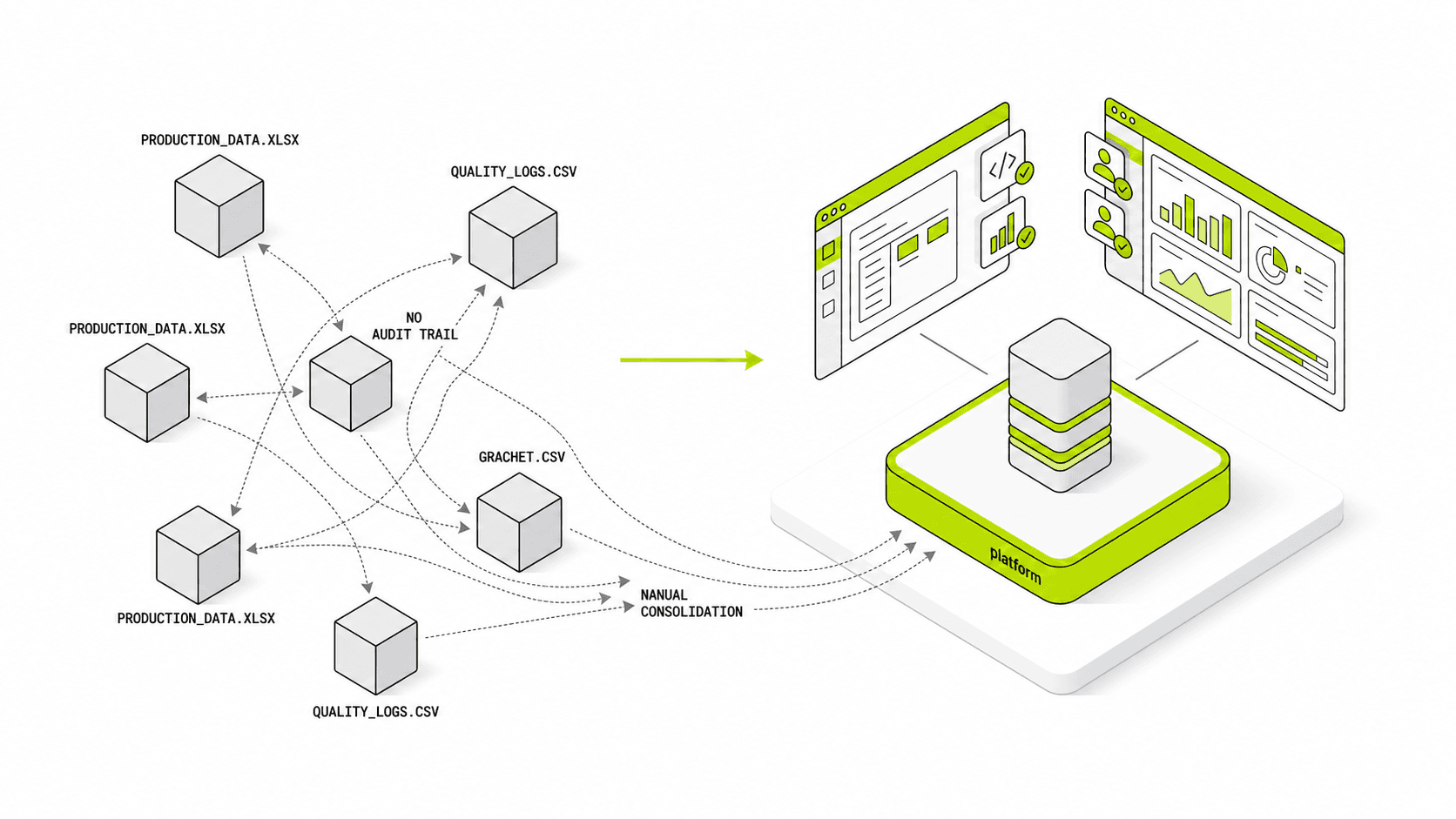
“The broker is the backbone of the UNS” is a useful slogan, but it can lead to a misleading conclusion: that deploying a broker is most of the work. In practice, a broker by itself produces topics, not a namespace. Topic strings can be designed to look like a UNS hierarchy, but without a platform that enforces semantics, every team that publishes or subscribes to those topics tends to interpret them slightly differently. Three years later, the namespace exists on paper but the meaning has drifted.
A full-stack UNS platform — Tier0's design point — keeps the messaging backbone, but adds the layers that help prevent semantic drift: Namespace for the real model of assets and events, time-series persistence to store their states over time, App Builder for applications that read from and write to that model, and platform-level governance over both the model and the applications. The broker is necessary, not sufficient.
How Tier0 uses MQTT
Inside Tier0, MQTT-based distribution lives inside the EventFlow module, with EMQX as the embedded engine. SourceFlow publishes acquired data into EventFlow; Namespace consumes and republishes through it; time-series persistence subscribes to it; App Builder generates apps that read from it and write back through it. To the engineers building applications, the messaging layer is invisible — they describe what they need in natural language, and the platform handles the underlying plumbing.
An MQTT broker moves data. Tier0 turns that movement into a governed UNS — modeled, persisted, analyzed, and reused to generate UNS-native applications.
Buyer recommendation
If the buyer needs scalable real-time messaging infrastructure that other systems will consume — for example, as the central broker for an enterprise integration architecture — evaluate standalone MQTT brokers. EMQX and HiveMQ are excellent at exactly this job.
If the buyer needs a complete Unified Namespace — with semantic modeling, acquisition, event processing, persistence, analytics, and generated industrial applications — a full-stack UNS platform is the correct choice. Tier0 embeds MQTT distribution inside the platform so the buyer does not have to assemble the rest of the stack themselves.