MING & Modern IIoT

Integration

4 minutes

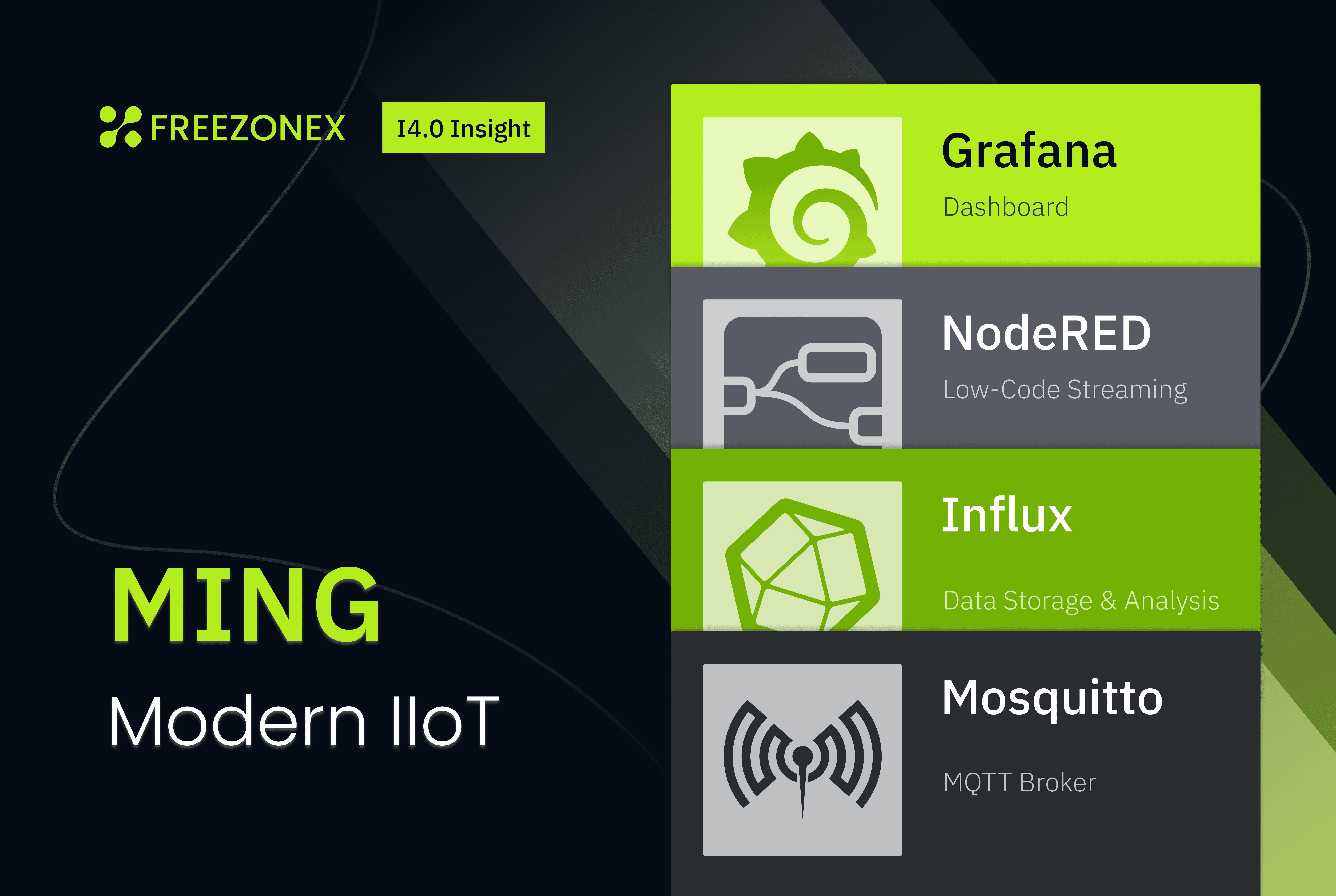
MING refers to the combination of four open-source software programs: Mosquitto, Influx, NodeRED, and Grafana. It is an innovative toolchain for industrial data integration and visualization.

As shown in the diagram, NodeRED parses protocols to retrieve data and passes it to Mosquitto for consumption by the application layer, records it on InfluxDB for trend analysis, and displays it through a human-machine interface(HMI) provided by Grafana. This process represents a classic use case of MING in IIoT.

The components of MING were invented at different times for different purposes and began to be used together by the industrial and IoT communities around 2017. Although it represents a significant integration innovation, MING has not been as revolutionary as the iPhone, and its recognition within the industrial sector remains relatively low today. However, since its inception, IIoT software has been forever changed.

Mosquitto

Mosquitto is the most popular MQTT Broker. Today, EMQX and HiveMQ are the mainstream brokers in the industrial sector, with HiveMQ delving deeper into the industrial side by implementing numerous industrial protocols and software interfaces (drivers). In MING, the broker acts as a protocol hub and forms the data foundation for IIoT use cases. More content about IIoT data integration: Industrial Data Integration and UNS

MQTT is a well-known protocol that needs little introduction, but when it comes to industrial scenarios, we often hear numerous intuitive objections: it's not secure, not real-time, not comprehensive, etc.

However, critics usually overlook the fact that industrial software, especially IIoT software, is so fundamentally flawed in its engineering that these criticisms seem more like self-critique: we are still using C# to develop Windows graphical interfaces; our real-time communication relies on hundreds of kilometers of network cables and wires; and in 2024, we are still using GAP to isolate risks.

Speaking of MQTT, many are unaware of its origins: decades ago, it was specifically invented to integrate telemetry data for the oil and gas industry. Its inventors are still active on the IIoT front today, utilizing a new method, Ignition+MQTT, to empower SCADA systems.

MQTT directly led to the birth and widespread adoption of the Unified Namespace. It combines subscription/publishing, event-driven architecture, high fault tolerance, and redundancy into a minimalist standard while leaving the implementation of brokers to the community and commercial companies, making OPC pale in comparison.

InfluxDB

queries, and statistical analysis.

The rise of time-series databases occurred around 2015, driven by the surging demands in logistics and IoT, as people sought databases capable of managing high-speed real-time data writes. Ultimately, traditional technologies like PI and KDB were not favored, leading to the reinvention of real-time/historical databases, with Influx emerging as a leader.

In the 2010s, open-source became a natural strategy for developing software products, and Influx naturally impacted the real-time/historical database industry. Today, with the rise of more time-series databases, TDengine has emerged with a cluster-based open-source approach, challenging Influx’s position. As competition intensifies, major TSDB (Time-Series Database) players are now focusing on areas like cloud-native, data analytics, and data lakehouse functionalities, while classic products like PI and PHD are increasingly moving away from the cutting edge of technology.

NodeRED

NodeRED is a low-code, flow-based programming software that IBM opened-sourced in 2018. It resembles the iPhone's multi-touch technology, bestowing MING with low-barrier magic that allows OT engineers or even laypersons to become "citizen developers." Based on NodeJS, NodeRED simplifies deployment, usage, and development. In the IIoT arena, it is ideally suited for solving last-mile problems, such as the common challenge in implementing UNS: "My software doesn't support MQTT interfaces, only webhook and REST; how can it communicate with an MQTT Broker?"

In NodeRED, engineers without a background in network programming can configure nodes using the drag-and-drop method, achieving MQTT to Anything conversions in just five minutes.

It is worth noting that NodeRED is not a panacea. In scenarios involving complex logic and data processing, NodeRED's efficiency diminishes as complexity and data volume increase, and issues arising from the NodeJS runtime also become apparent. However, this hasn't hindered NodeRED's rapid popularity in markets like Japan, Southeast Asia, and the Americas because of its simplicity and ease of use. NodeRED has become the de facto standard among boutique integrators and end-user IIoT teams.

Grafana

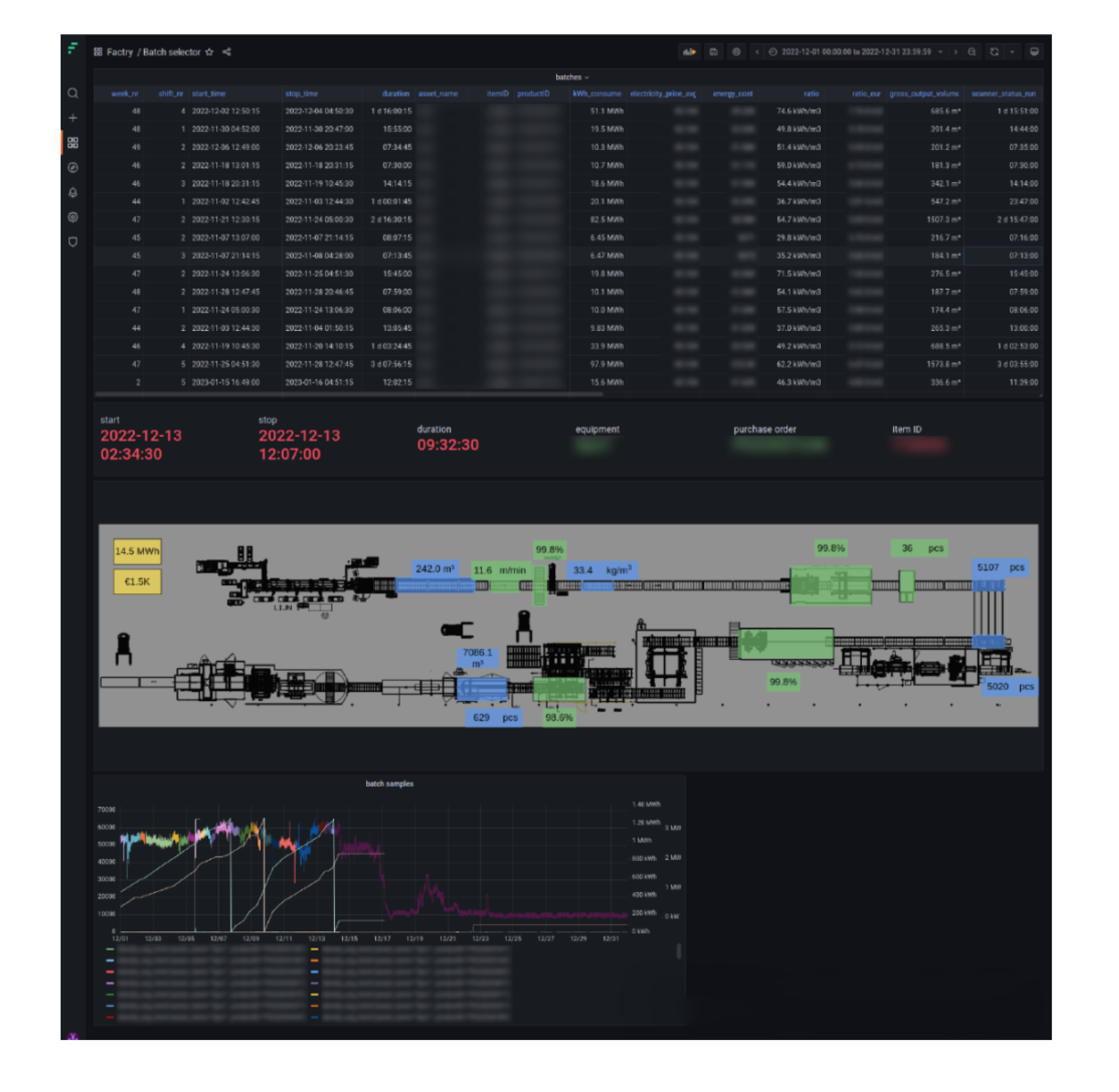
Grafana is a well-known open-source software nearly all internet companies use as a monitoring dashboard tool. Most OT professionals are surprised to hear about Grafana being used for SCADA, yet they can't accurately pinpoint what might be wrong.

With a "let's try it" attitude, some community members have experimented with Grafana in production settings. A notable case from UMH(United Manufacturing Hub) shows that common perceived barriers like reverse control, real-time, and graphical elements don't exist. The underlying reason is simple: the web is the most advanced and powerful user interface platform, and Grafana, being a web-native project without technical baggage, can be easily distributed across various hardware with great flexibility.
Core Values

MING's competitiveness stems from various aspects, three of which reveal the direction of IIoT.

Open Source

Open source reduces costs to zero, making it impossible for commercial software of the same level to compete. The open-source software's user base and community culture often enable it to surpass commercial product capabilities. Once it has captured market share and set technical standards, open-source software can gradually generate profits through freemium models and premium versions. Kong and Redis are successful examples of commercialization in open source.

In the highly fragmented, low technical barrier, and consensus-seeking IIoT sector, open source competitiveness is magnified.

Ease of Use

Tag numbers, configurations, objects, and registers—these terms and operations are a rite of passage for OT/IT engineers. They aren't challenging but come with obscure names and mechanical procedures. Similar to the slide covers on classic phones or SIM cards of different sizes, these represent the mental load caused by technological bottlenecks and outdated human-machine interaction designs. While drag-and-drop didn’t conquer the highly competitive world of IT, in the OT data integration realm, NodeRED has aptly achieved a balance between efficiency and simplicity.

Modernization

No matter how exquisite a product may be, it cannot transcend time. Decades later, at best, these products are revered as classics, but they are also phased out from mainstream engineering applications. In 2024, technologies like the Web, containers, and cloud are considered modern, and classic Windows XP software cannot and should not compete with modern tech stacks.

Even with a clear technological direction, the future will not arrive instantaneously; it's unrealistic to expect a magical silver bullet from the IT world that will instantly penetrate the moat around traditional industrial software. There are still so many Windows workstations in the production lines and control rooms. Operators and engineers are more familiar with SCADA technology than the web, and decision-makers will not use production practices for experiments.

Over the next 5 to 10 years, iterating traditional software and pursuing integration innovations like MING are equally important, and both present systemic business opportunities. In the software sector, the future often does not build directly based on the past. OT software should show a commitment similar to the shift toward Rust in Linux. It should leverage modern technologies to reimagine industry, discard outdated practices, maximize engineers' creativity, and reshape the future.

After nearly a decade of development, the IIoT toolchain has evolved from MING to a combination of platform engineering and applications. Our upcoming article will explore the optimal technology combinations and best practices in the IIoT sector. Stay tuned!

Recent blogs

  • Product

    Tier0 vs MQTT Brokers (EMQX, HiveMQ): Why a Broker Is Necessary But Not Sufficient

    May 26, 2026

    Product

    Tier0 vs Ignition: Two Paradigms - SCADA Engineering vs UNS + Natural-Language Generation

    May 25, 2026

    Product

    Tier0 vs United Manufacturing Hub: Open-Source Infrastructure or Productized UNS Application Delivery?

    May 22, 2026

    Product

    Tier0 vs HighByte: Industrial DataOps Component or Full-Stack UNS Platform with AI-Generated Apps?

    May 21, 2026

    UNS

    The Full-Stack UNS Platform: From Data Foundation to UNS-Native Applications

    May 20, 2026

    Partner

    Tier0 × EMQX: Building a Real-Time Data Foundation for Industrial AI

    May 19, 2026

    UNS

    What is Unified Namespace (UNS)?

    May 6, 2026

    Product

    What is an Industrial App Platform?

    May 7, 2026

    Use Cases

    What is Lightweight Digitalization?

    May 8, 2026

    Use Cases

    From Excel to System: What Changes?

    May 7, 2026

    Use Cases

    What is Shopfloor Digitalization?

    May 7, 2026

    AI

    Reinventing Industrial Software

    Apr 18, 2026

    UNS

    UNS – The Sole Key to Industrial Digitalization

    Oct 10, 2024

    AI

    Lightweight Multimodal Models for Edge-Based Defect Detection

    Sep 23, 2024

    AI

    Discrete-Event Simulation + Reinforcement Learning

    Sep 9, 2024

    Integration

    MING & Modern IIoT

    Aug 21, 2024

    UNS

    Revolutionize Industrial Data Integration: The UNS Approach

    Feb 7, 2024

  • Product

    Tier0 vs MQTT Brokers (EMQX, HiveMQ): Why a Broker Is Necessary But Not Sufficient

    May 26, 2026

    Product

    Tier0 vs Ignition: Two Paradigms - SCADA Engineering vs UNS + Natural-Language Generation

    May 25, 2026

    Product

    Tier0 vs United Manufacturing Hub: Open-Source Infrastructure or Productized UNS Application Delivery?

    May 22, 2026

    Product

    Tier0 vs HighByte: Industrial DataOps Component or Full-Stack UNS Platform with AI-Generated Apps?

    May 21, 2026

    UNS

    The Full-Stack UNS Platform: From Data Foundation to UNS-Native Applications

    May 20, 2026

    Partner

    Tier0 × EMQX: Building a Real-Time Data Foundation for Industrial AI

    May 19, 2026

    UNS

    What is Unified Namespace (UNS)?

    May 6, 2026

    Product

    What is an Industrial App Platform?

    May 7, 2026

    Use Cases

    What is Lightweight Digitalization?

    May 8, 2026

    Use Cases

    From Excel to System: What Changes?

    May 7, 2026

    Use Cases

    What is Shopfloor Digitalization?

    May 7, 2026

    AI

    Reinventing Industrial Software

    Apr 18, 2026

    UNS

    UNS – The Sole Key to Industrial Digitalization

    Oct 10, 2024

    AI

    Lightweight Multimodal Models for Edge-Based Defect Detection

    Sep 23, 2024

    AI

    Discrete-Event Simulation + Reinforcement Learning

    Sep 9, 2024

    Integration

    MING & Modern IIoT

    Aug 21, 2024

    UNS

    Revolutionize Industrial Data Integration: The UNS Approach

    Feb 7, 2024