Tier0 vs HighByte: Industrial DataOps Component or Full-Stack UNS Platform with AI-Generated Apps?
Product
3 minutes
HighByte is widely associated with Industrial DataOps and Unified Namespace implementation. Its Intelligence Hub helps manufacturers standardize and contextualize industrial data so downstream systems can consume modeled information instead of raw tags. For teams whose primary missing layer is data contextualization, HighByte is a credible and focused choice.
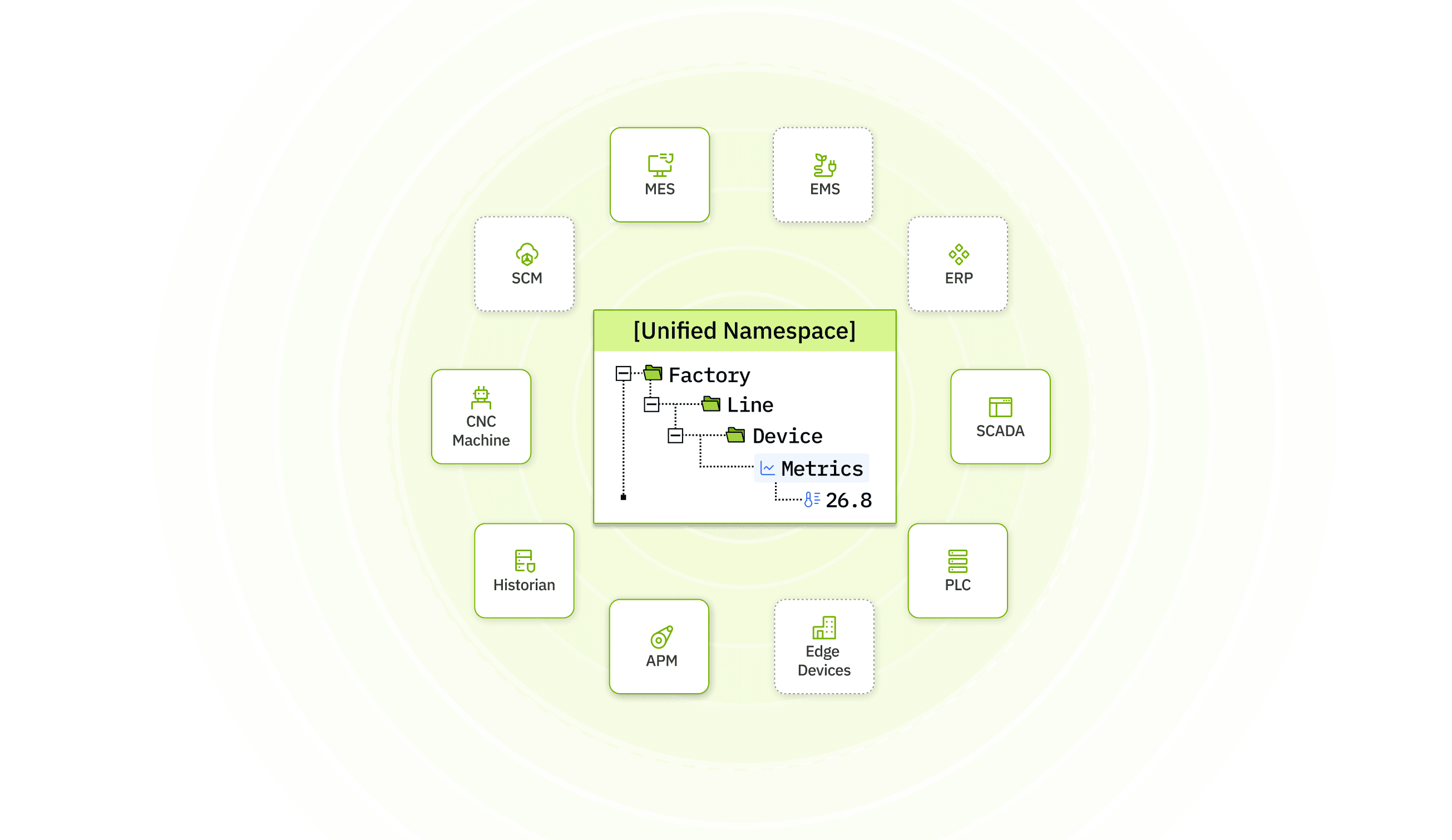
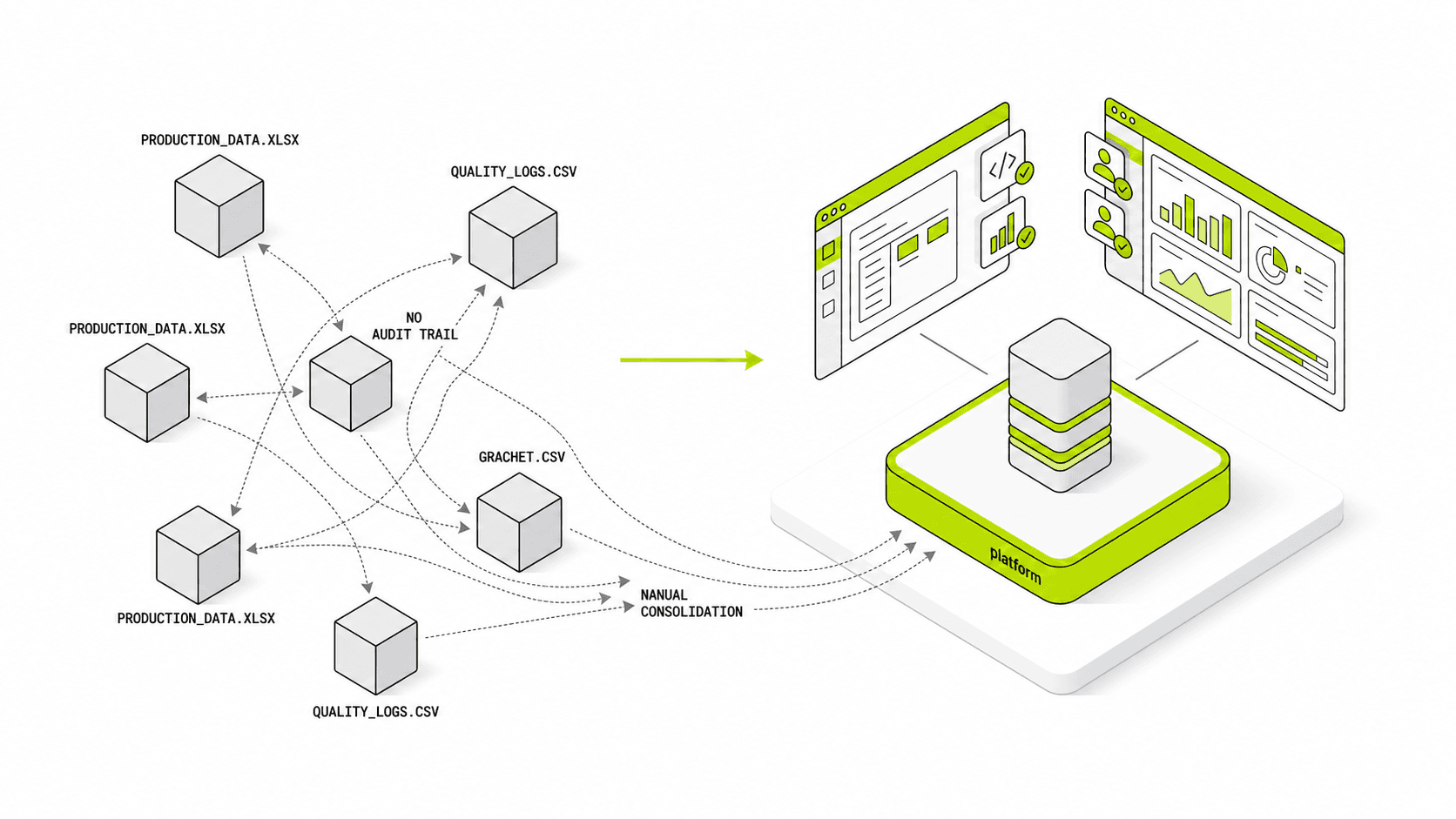
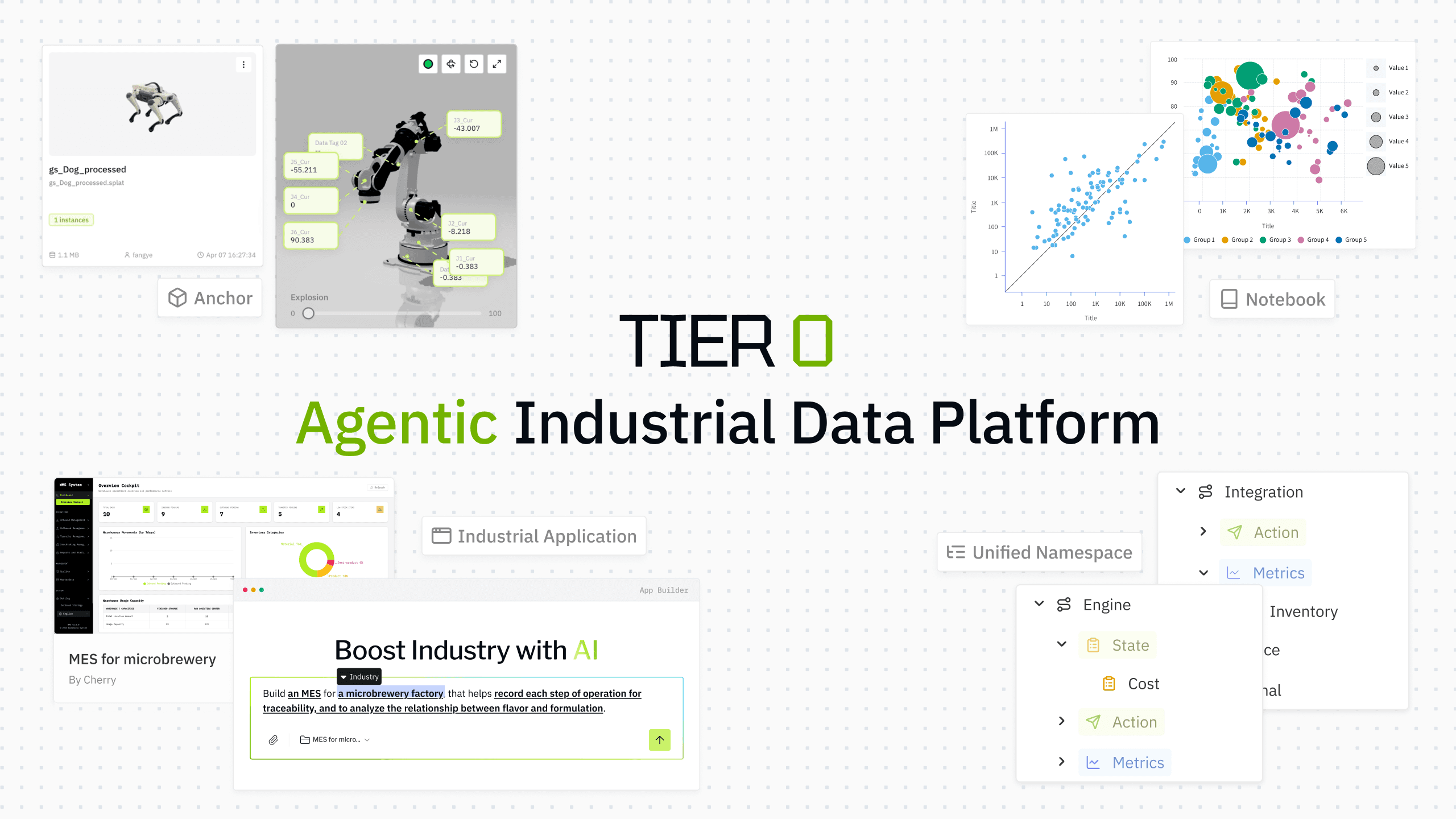
Tier0 plays a different role in the architecture. HighByte is typically used as an Industrial DataOps component that sits in the middle of an assembled UNS stack. Tier0 is a full-stack UNS platform: Namespace, SourceFlow, EventFlow, time-series persistence, Notebook, and App Builder are productized as one platform. The two products do not occupy the same row of the UNS stack.
Scope comparison
Capability | HighByte Intelligence Hub | Tier0 |
|---|---|---|
Data acquisition | Connects to industrial sources for modeling workflows. | SourceFlow as productized acquisition module. |
Event processing and MQTT distribution | Integrates with external messaging and downstream destinations. | EventFlow, including MQTT-based distribution. |
Historian / time-series | Typically integrates with external historians. | Embedded TimescaleDB, also support 3rd party historian. |
Semantic modeling, ISA-95, UNS contextualization | Core strength. Industrial DataOps focus. | Namespace as the native semantic model of the platform. |
Analytics / notebooks | Typically handled by downstream systems. | Notebook connected to the same UNS foundation. |
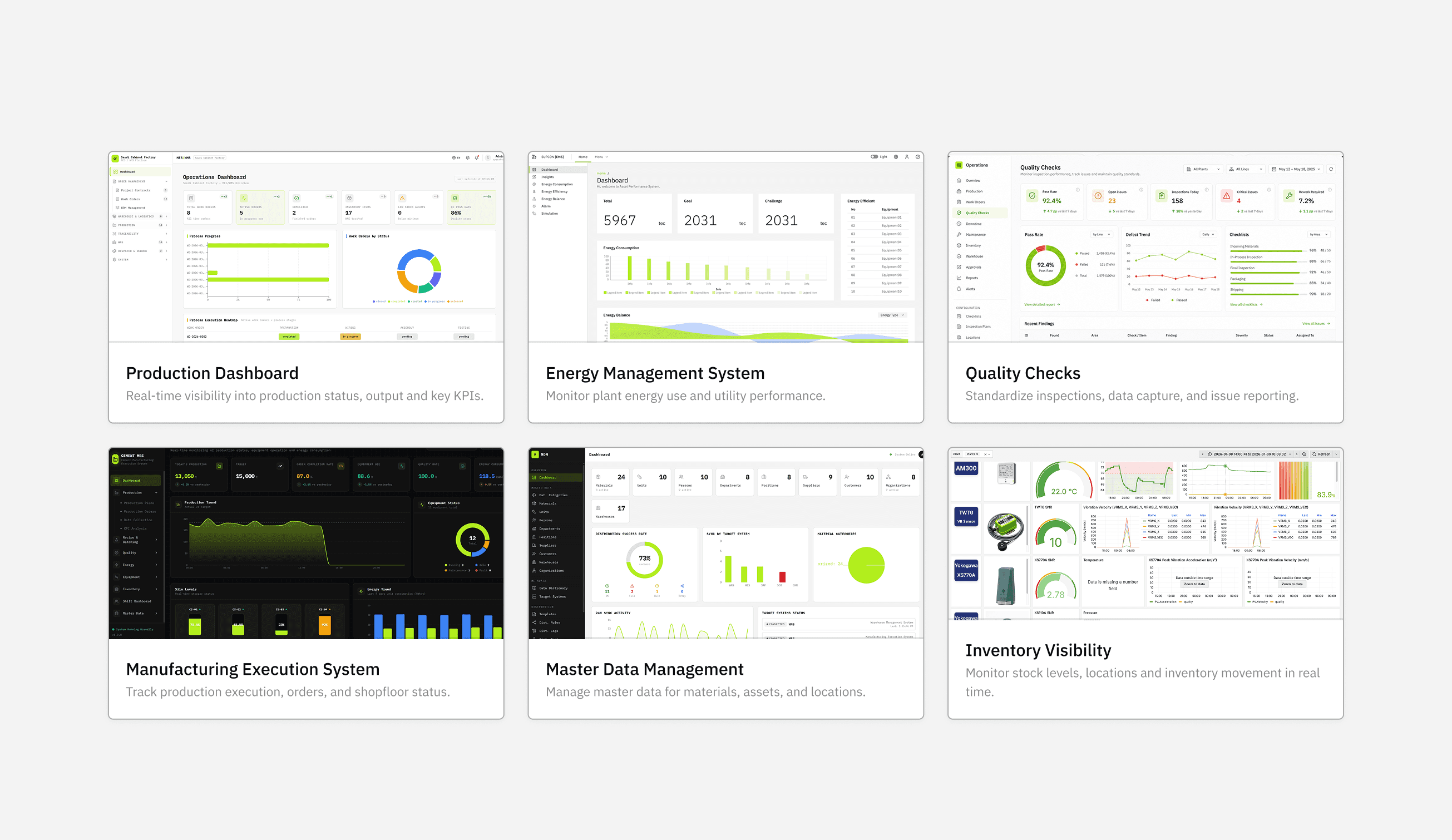
Application generation | Typically handled by downstream systems or custom apps. | App Builder generates UNS-native apps from natural language. |
What ships out of the box | Industrial DataOps middleware. | Full UNS foundation plus AI application generation. |
Two different shapes of value
HighByte's value is depth in one layer. If contextualization is the bottleneck — if raw tags are the real reason downstream systems cannot consume operational data — HighByte solves that specific problem well, and integrates with whichever broker, historian, and application stack the team already has.
Tier0's value is breadth plus generation. Tier0 covers the layers HighByte does not (acquisition, event processing and MQTT distribution, persistence, analytics, applications), and it adds something neither HighByte nor most of the market offers: the ability for a process engineer, quality engineer, or maintenance engineer to describe an application in natural language and get a working app — one that reads from and writes back to the same Namespace as every other Tier0 app.
Where the gap really shows: the application layer
Even after HighByte has contextualized the data, someone still has to build the applications that consume it. In the HighByte world, those applications are typically downstream systems — engineered by integrators or in-house developers, each with its own data model, its own UI framework, and its own integration back to the namespace. The contextualized data is consistent; the apps that consume it are not.
In the Tier0 world, applications are designed as part of the platform. They are generated by App Builder from the Namespace itself, and they are UNS-native by default: they share the same semantic model, the same authentication, and the same write-back paths. A downtime report and a maintenance work-order app generated six months apart do not need separate integration work to share the meaning of “equipment.”
HighByte standardizes the data. Tier0 standardizes the data and the applications that consume it.
When HighByte may be the better choice
HighByte may be the better fit when the team already owns a mature application stack and only needs a focused Industrial DataOps layer to feed it. The team in this scenario typically has engineering capacity, defined application standards, and a preference for component-based architectures.
When Tier0 may be the better choice
Tier0 may be the better fit when the team wants a UNS foundation, time-series persistence, analytics, and working industrial applications delivered together — and wants engineers (not specialized developers) to generate those applications in natural language. If the goal is to deliver MES-style, WMS-style, quality, downtime, and maintenance apps quickly on a shared semantic foundation, Tier0's full-stack and AI-native approach is the more direct path.