What is Lightweight Digitalization?
Use Cases
3 minutes
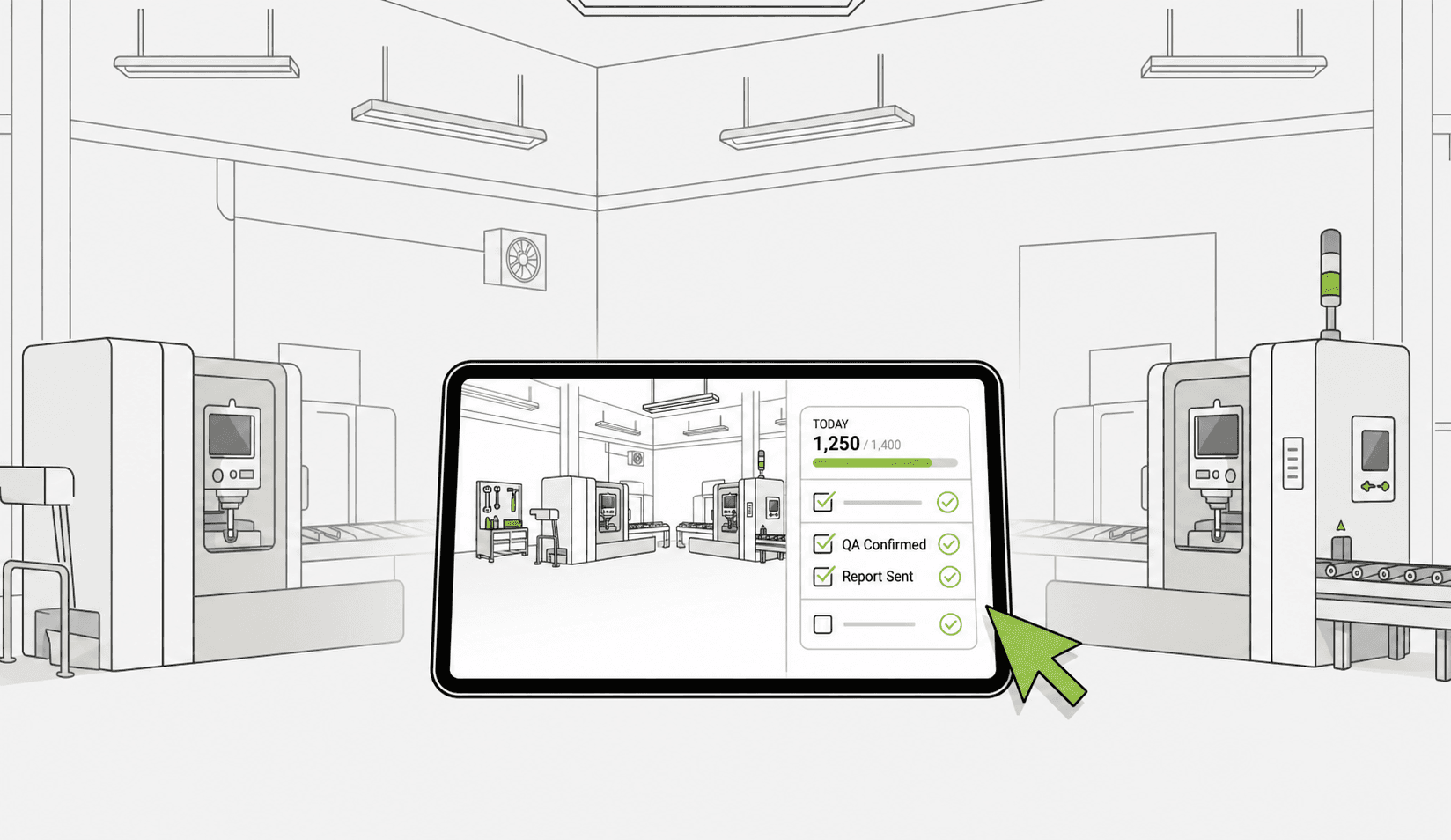
Lightweight digitalization means improving business or operational workflows with focused, practical software instead of starting with a large, multi-year transformation program. It is usually the right approach when a company has real pain points but does not want every improvement to become a major system project.
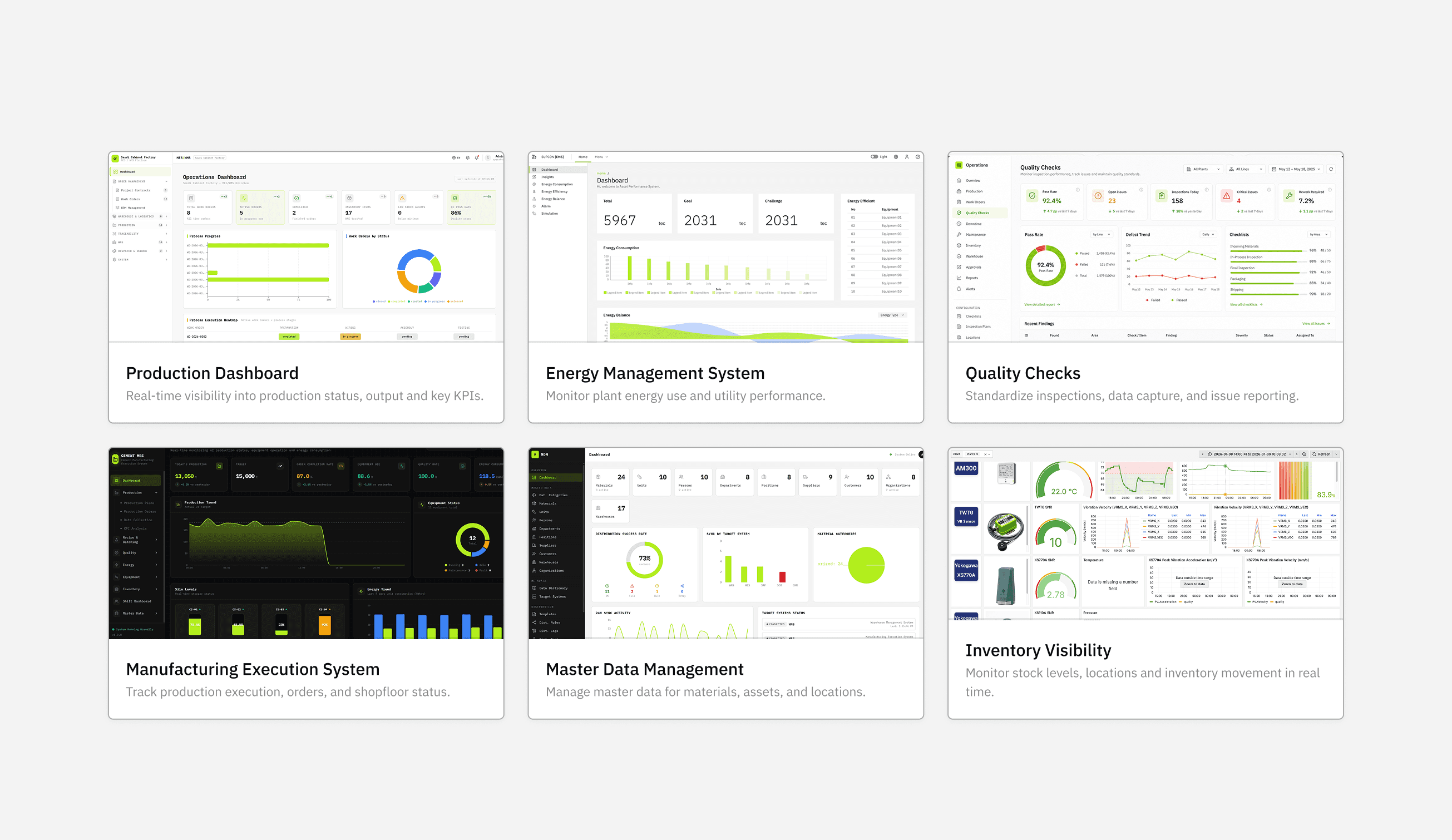
In manufacturing, lightweight digitalization often starts with one specific use case: production reporting, shift handover, inspection records, abnormal tracking, downtime logging, or inventory movement. The goal is not to build a giant system on day one. The goal is to solve one real problem quickly, prove value, and expand from there.
Why the term matters
Many companies want digital improvement, but the phrase “digital transformation” can feel too broad, too abstract, or too expensive. That is because it is often associated with large programs, complex change management, and heavy implementation cycles.
Lightweight digitalization is different. It is pragmatic. It accepts that not every problem needs a full enterprise program. It focuses on high-frequency workflows where better records, traceability, coordination, or visibility can create immediate operational value.
Typical examples
Common examples include:
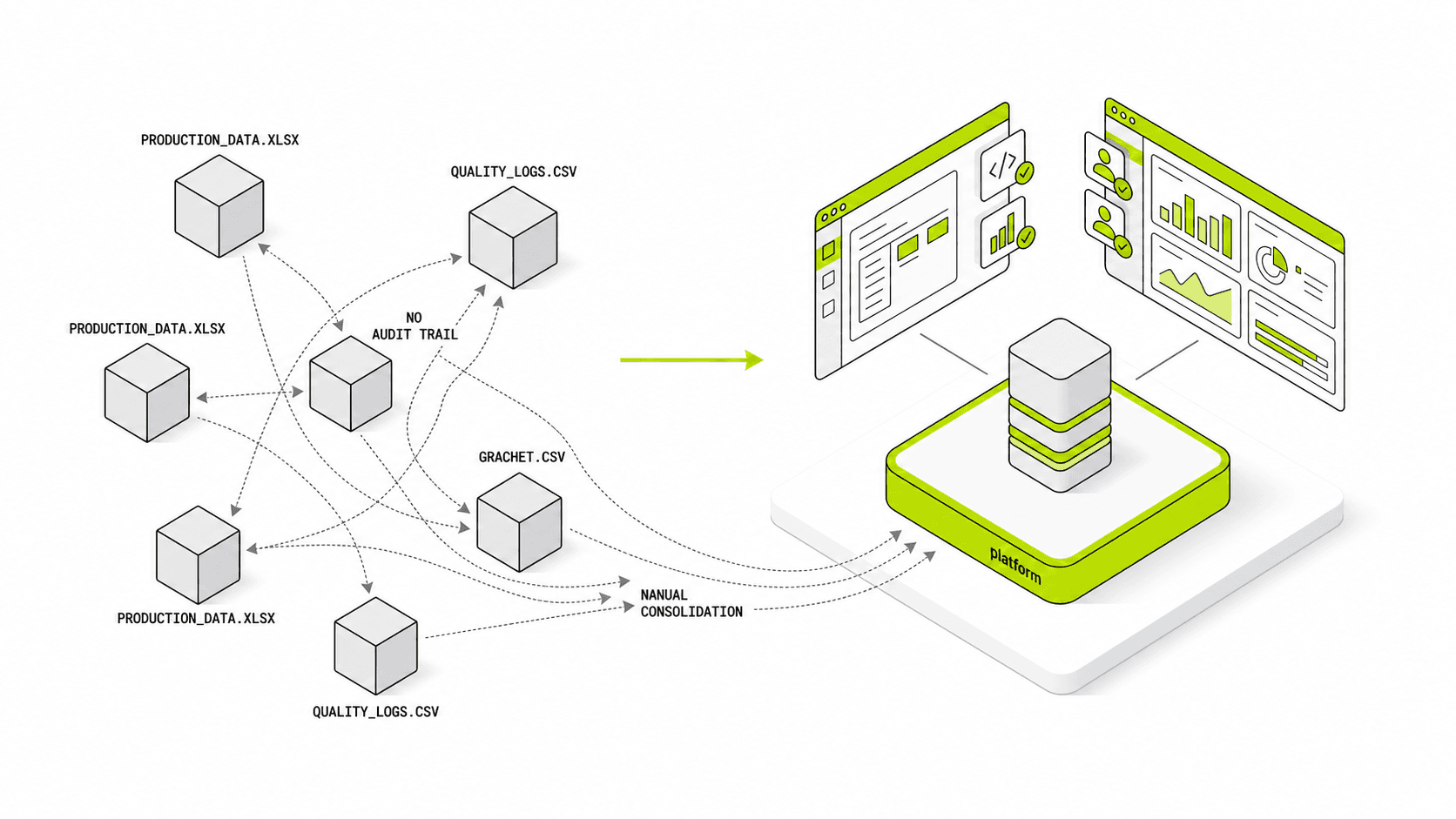
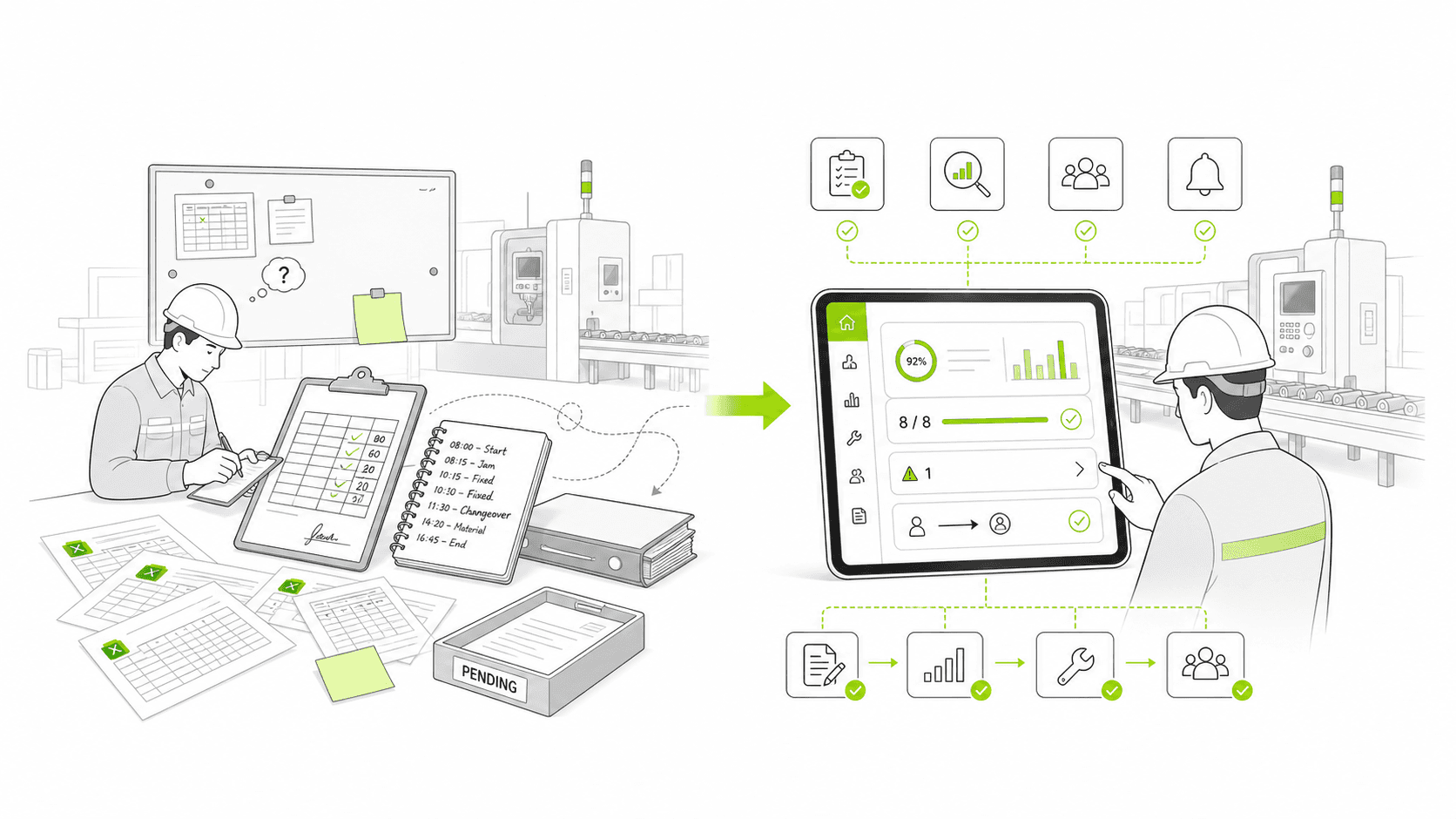
replacing Excel-based production reporting with a structured digital form
replacing a paper shift handover book with a simple role-based app
digitizing inspection checklists and abnormal capture
recording downtime reasons in real time instead of after-the-fact spreadsheets
digitizing stock-in, stock-out, and cycle-count records for a small warehouse
These are not trivial workflows. They matter to the business. But they are often too small to justify a full-scale software project.

Why it works
Lightweight digitalization works because it aligns better with how many businesses actually improve operations. Most teams do not need a complete future-state architecture before they can fix one painful process. They need a solution that can be used quickly, refined in real operation, and expanded when the organization is ready.
This approach also lowers adoption risk. A business can start with one team, one line, one area, or one workflow. If the result is useful, the model can be extended. If not, the cost and disruption are still much lower than a heavyweight project.
What lightweight digitalization is not
It is not the same as buying random small tools with no structure. That creates fragmentation. It is also not just “moving paper into a screen” if no process clarity, role visibility, or data traceability is added.
The best lightweight digitalization creates software that is simple to adopt but still structured enough to support better management. That means clear records, defined status, appropriate permissions, and reusable data where possible.