From Excel to System: What Changes?

Use Cases

3 minutes

Spreadsheets vs Structured Apps

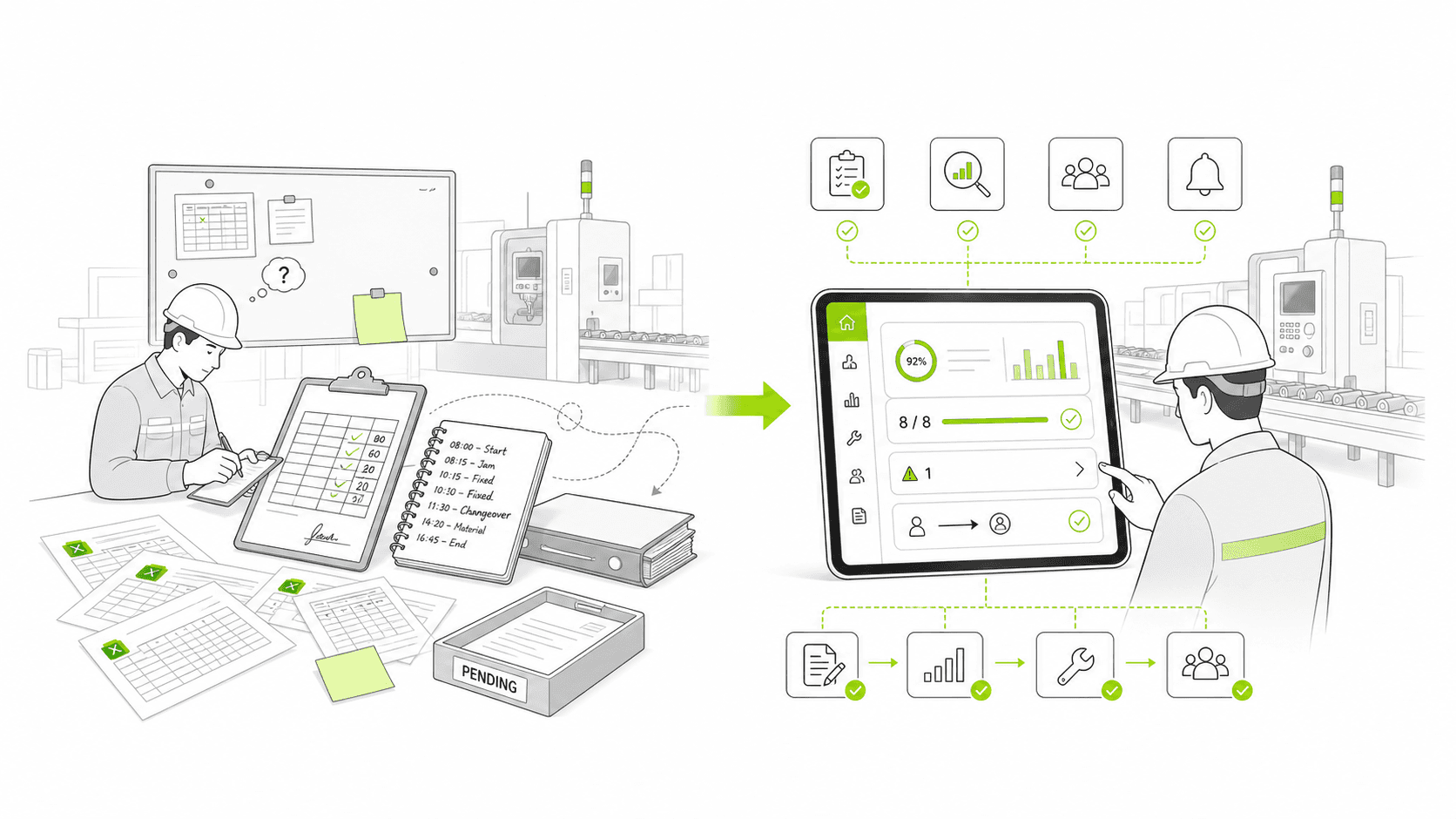
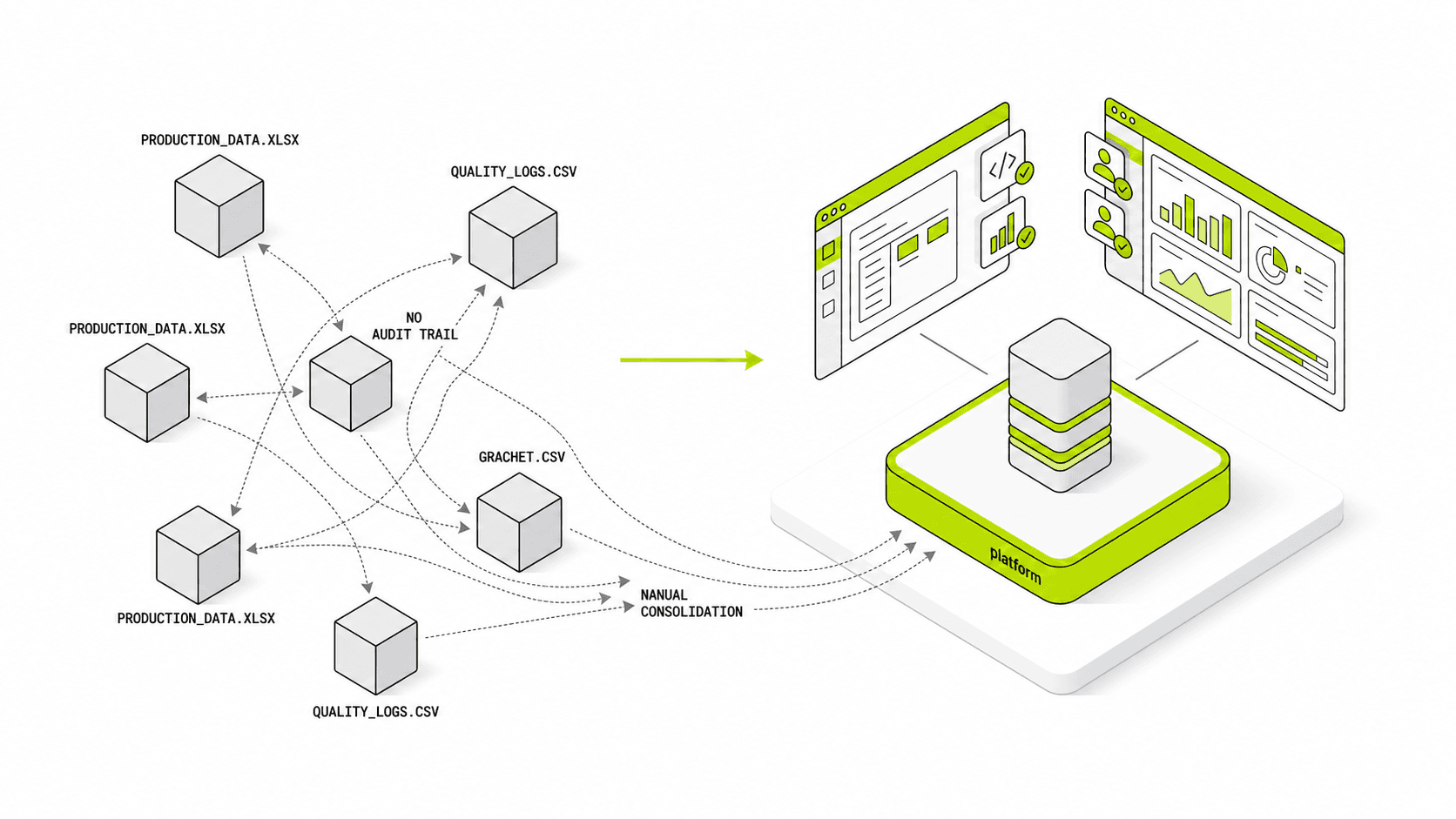
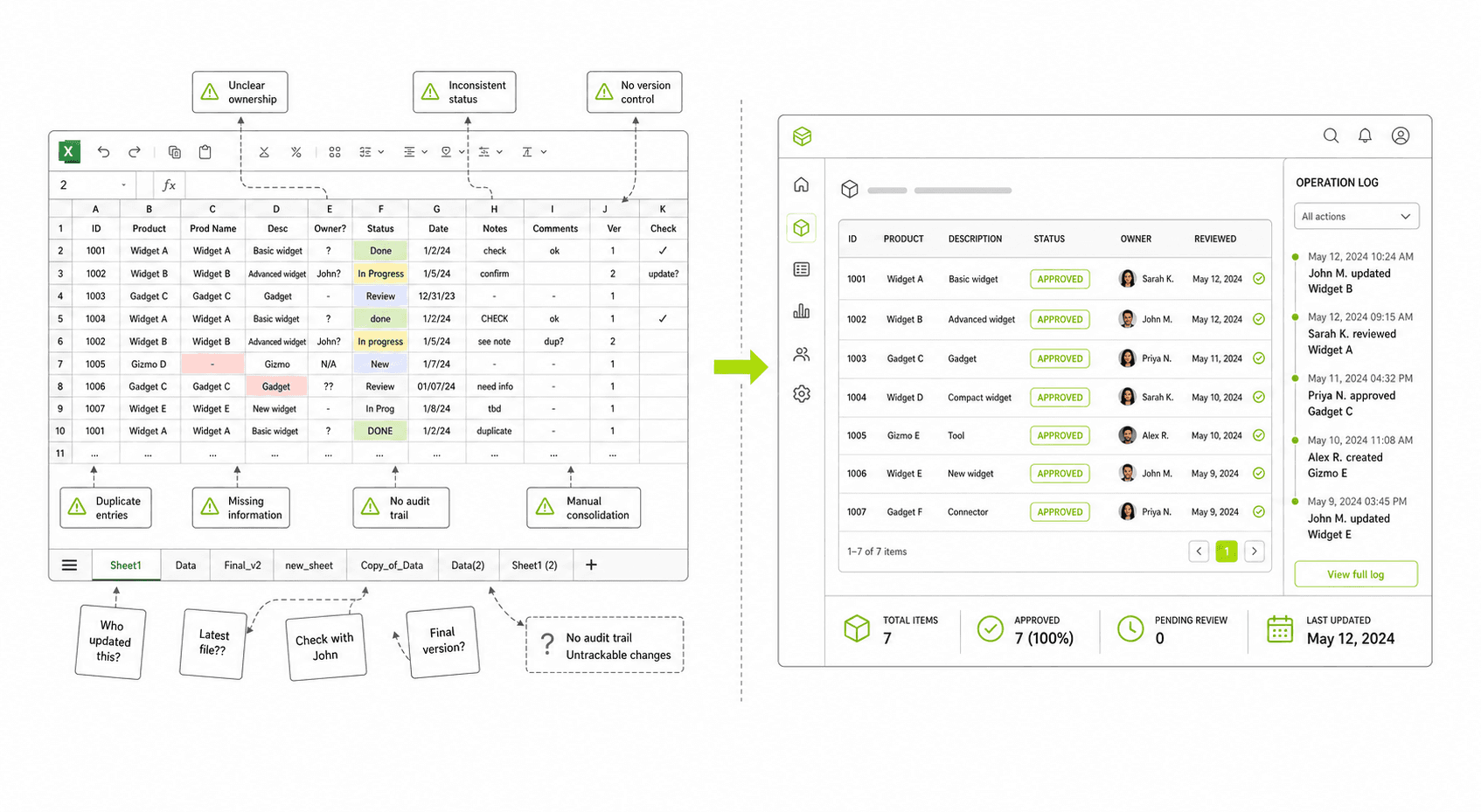
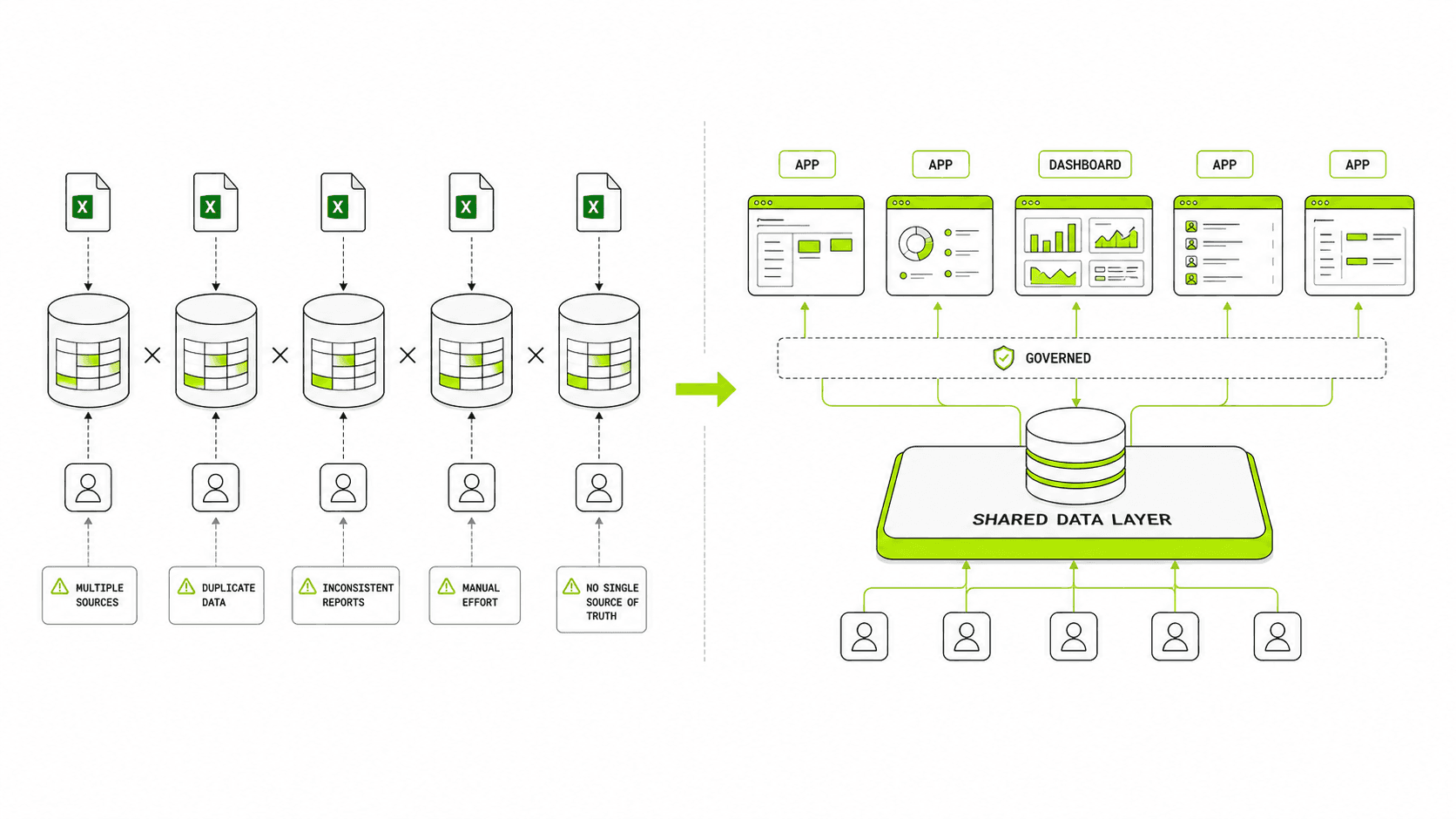
Spreadsheet-based management and a structured operational system are often discussed together, but they solve different problems and make sense in different operating contexts. Spreedsheet brings a criticle risk: In a spreadsheet, anyone can overwrite a production record with no audit trail. In a structured app, every entry is timestamped, attributed to a user, and versioned automatically. The wrong choice usually happens when a business evaluates them as interchangeable. A better approach is to compare them based on goal, implementation model, time to value, flexibility, and long-term operating impact.
What each approach is designed to do

Spreadsheet-based management is typically chosen when companies need lightweight recording and familiarity. a structured operational system is usually chosen when companies need better control, traceability, collaboration, and process visibility. That means the real decision is rarely about which label sounds more advanced. It is about which model matches the business problem.

Decision criteria

  • Version control and data consistency

  • Role-based access instead of unrestricted editing

  • Process status and ownership instead of manual follow-up

  • Structured records and reporting instead of manual consolidation

  • A path to reuse data across applications instead of keeping it locked in isolated files
Time, cost, and change impact

One of the most practical differences between Spreadsheet-based management and a structured operational system is how change is handled. With Spreadsheet-based management, organizations often accept more predefined structure in exchange for stronger standardization. With a structured operational system, organizations usually expect faster adaptation for focused workflows, but they must still maintain governance and avoid fragmentation.

That makes the decision less about technology purity and more about operational fit. If the company needs a broad, tightly controlled operating model across many execution domains, Spreadsheet-based management may be more appropriate. If the company needs to launch targeted use cases quickly without turning each one into a custom project, a structured operational system can be the better route.

Where Tier0 fits

Tier0’s relevance here is not simply that it can replace a spreadsheet with a form. The stronger story is that it can turn frequently used operational workflows into governed applications while preserving a more reusable data structure underneath.

Final takeaway

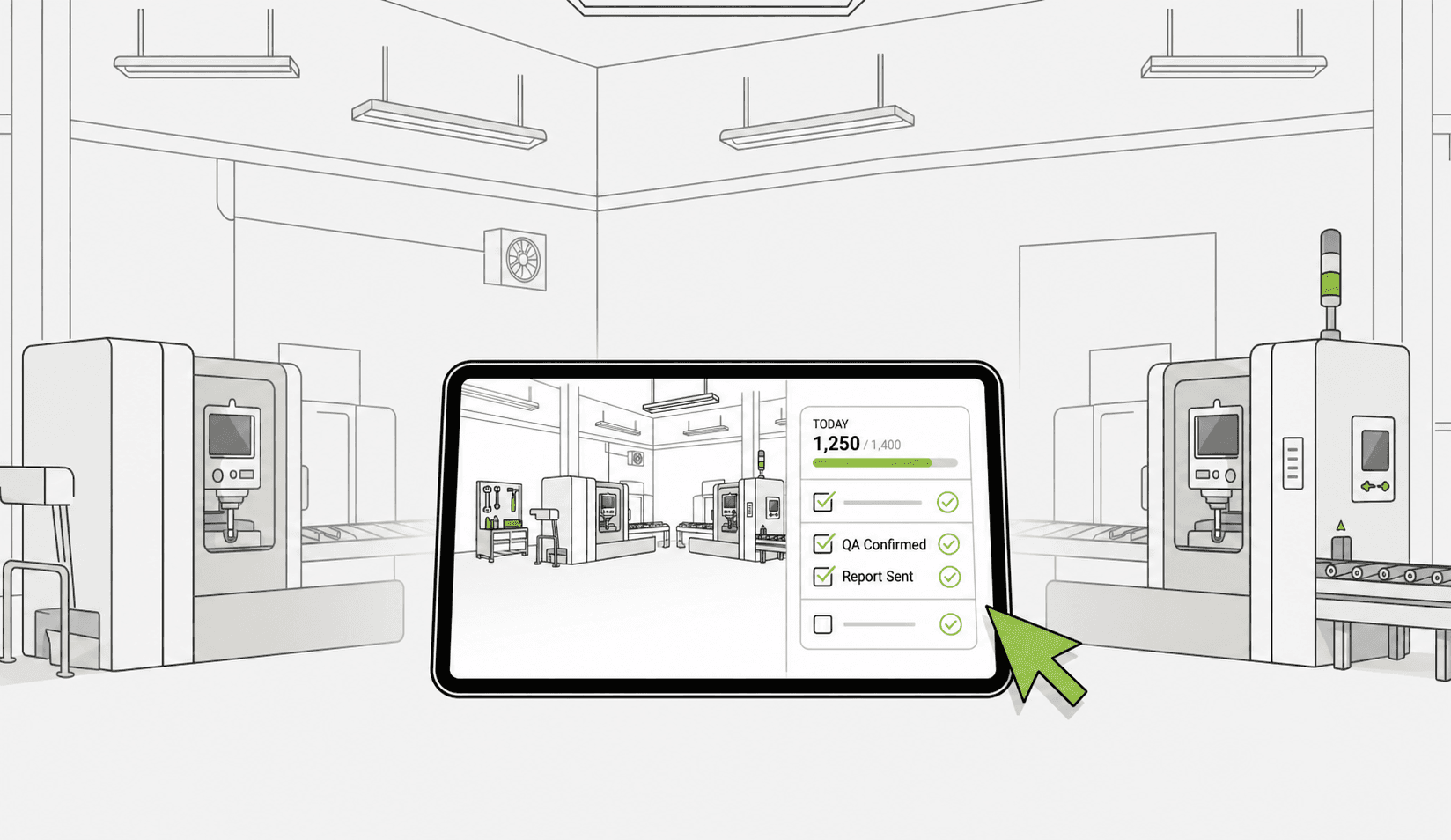
Moving from Excel to a structured system is not an all-or-nothing decision. Many manufacturers start by digitizing one high-frequency workflow—like daily production reporting—and expand from there as the team gains confidence.
FAQ

Can both coexist?

Which is better for a first project?

What should we evaluate first?


Need help deciding which approach fits your environment? We can map your use case and recommend the most practical path.

Recent blogs

  • Product

    Tier0 vs MQTT Brokers (EMQX, HiveMQ): Why a Broker Is Necessary But Not Sufficient

    May 26, 2026

    Product

    Tier0 vs Ignition: Two Paradigms - SCADA Engineering vs UNS + Natural-Language Generation

    May 25, 2026

    Product

    Tier0 vs United Manufacturing Hub: Open-Source Infrastructure or Productized UNS Application Delivery?

    May 22, 2026

    Product

    Tier0 vs HighByte: Industrial DataOps Component or Full-Stack UNS Platform with AI-Generated Apps?

    May 21, 2026

    UNS

    The Full-Stack UNS Platform: From Data Foundation to UNS-Native Applications

    May 20, 2026

    Partner

    Tier0 × EMQX: Building a Real-Time Data Foundation for Industrial AI

    May 19, 2026

    UNS

    What is Unified Namespace (UNS)?

    May 6, 2026

    Product

    What is an Industrial App Platform?

    May 7, 2026

    Use Cases

    What is Lightweight Digitalization?

    May 8, 2026

    Use Cases

    From Excel to System: What Changes?

    May 7, 2026

    Use Cases

    What is Shopfloor Digitalization?

    May 7, 2026

    AI

    Reinventing Industrial Software

    Apr 18, 2026

    UNS

    UNS – The Sole Key to Industrial Digitalization

    Oct 10, 2024

    AI

    Lightweight Multimodal Models for Edge-Based Defect Detection

    Sep 23, 2024

    AI

    Discrete-Event Simulation + Reinforcement Learning

    Sep 9, 2024

    Integration

    MING & Modern IIoT

    Aug 21, 2024

    UNS

    Revolutionize Industrial Data Integration: The UNS Approach

    Feb 7, 2024

  • Product

    Tier0 vs MQTT Brokers (EMQX, HiveMQ): Why a Broker Is Necessary But Not Sufficient

    May 26, 2026

    Product

    Tier0 vs Ignition: Two Paradigms - SCADA Engineering vs UNS + Natural-Language Generation

    May 25, 2026

    Product

    Tier0 vs United Manufacturing Hub: Open-Source Infrastructure or Productized UNS Application Delivery?

    May 22, 2026

    Product

    Tier0 vs HighByte: Industrial DataOps Component or Full-Stack UNS Platform with AI-Generated Apps?

    May 21, 2026

    UNS

    The Full-Stack UNS Platform: From Data Foundation to UNS-Native Applications

    May 20, 2026

    Partner

    Tier0 × EMQX: Building a Real-Time Data Foundation for Industrial AI

    May 19, 2026

    UNS

    What is Unified Namespace (UNS)?

    May 6, 2026

    Product

    What is an Industrial App Platform?

    May 7, 2026

    Use Cases

    What is Lightweight Digitalization?

    May 8, 2026

    Use Cases

    From Excel to System: What Changes?

    May 7, 2026

    Use Cases

    What is Shopfloor Digitalization?

    May 7, 2026

    AI

    Reinventing Industrial Software

    Apr 18, 2026

    UNS

    UNS – The Sole Key to Industrial Digitalization

    Oct 10, 2024

    AI

    Lightweight Multimodal Models for Edge-Based Defect Detection

    Sep 23, 2024

    AI

    Discrete-Event Simulation + Reinforcement Learning

    Sep 9, 2024

    Integration

    MING & Modern IIoT

    Aug 21, 2024

    UNS

    Revolutionize Industrial Data Integration: The UNS Approach

    Feb 7, 2024