What is Shopfloor Digitalization?

Use Cases

3 minutes

Activating Frontline Value

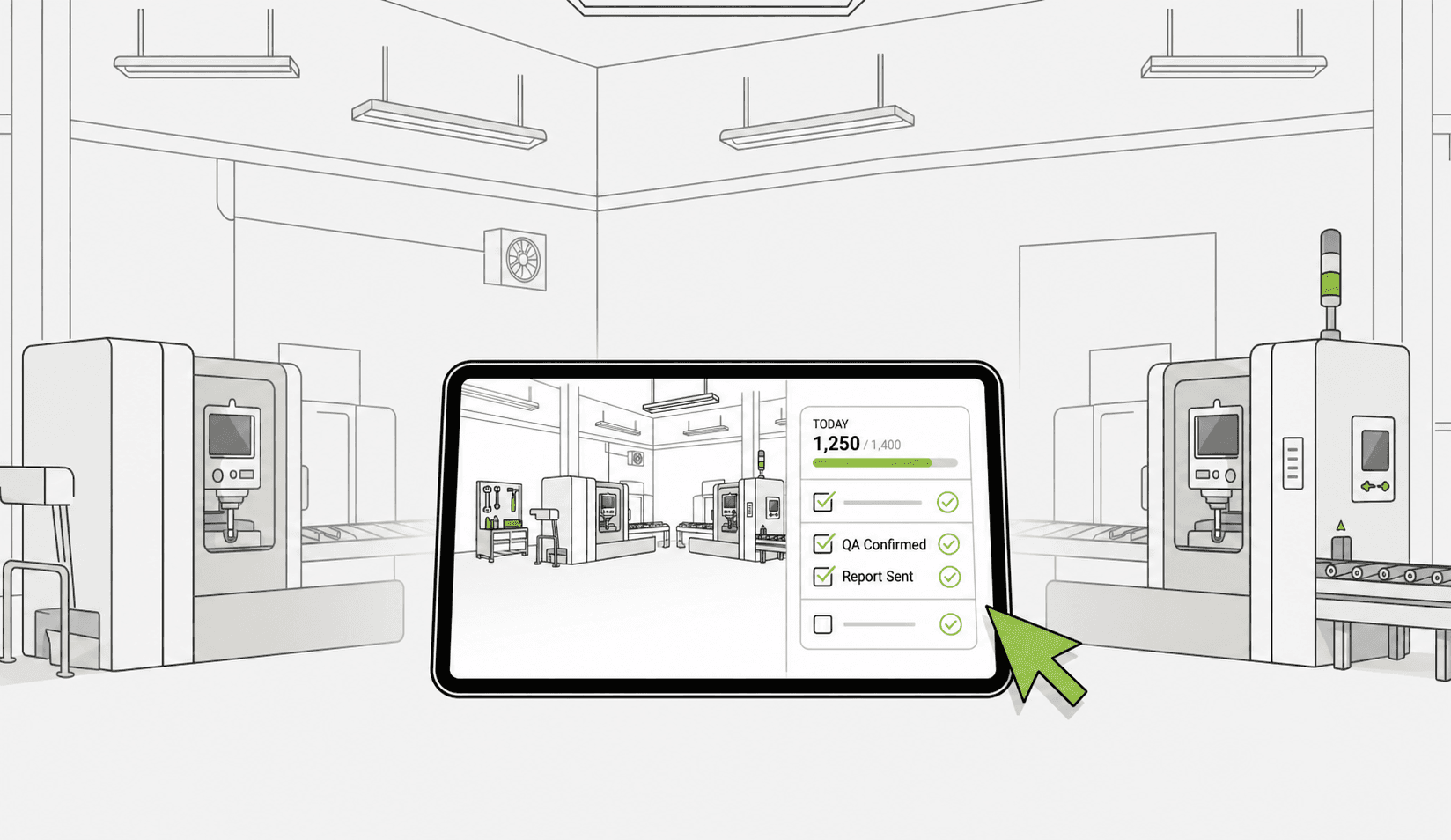
Shopfloor digitalization means improving frontline manufacturing work with better digital tools, structured data capture, and clearer process visibility. It is less about abstract transformation language and more about making daily execution easier to manage.

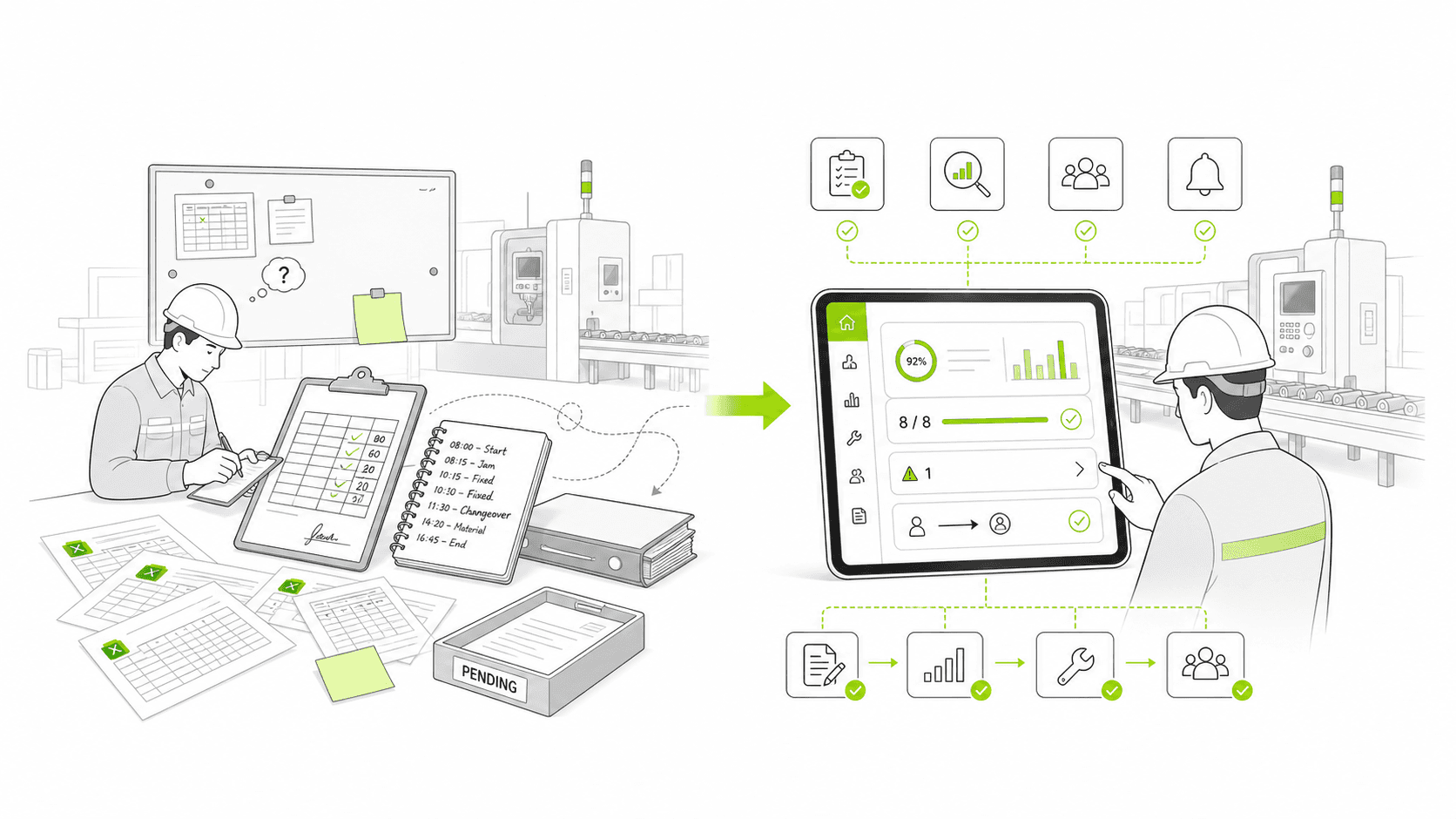
On the shopfloor, many important actions still depend on paper records, chat messages, whiteboards, or spreadsheets. Production results are written down and later re-entered. Shift handover relies on a notebook. Inspection records are filed manually. Abnormal events are reported informally. These methods may function, but they create delays, missing context, weak traceability, and unnecessary management effort.

What shopfloor digitalization usually includes

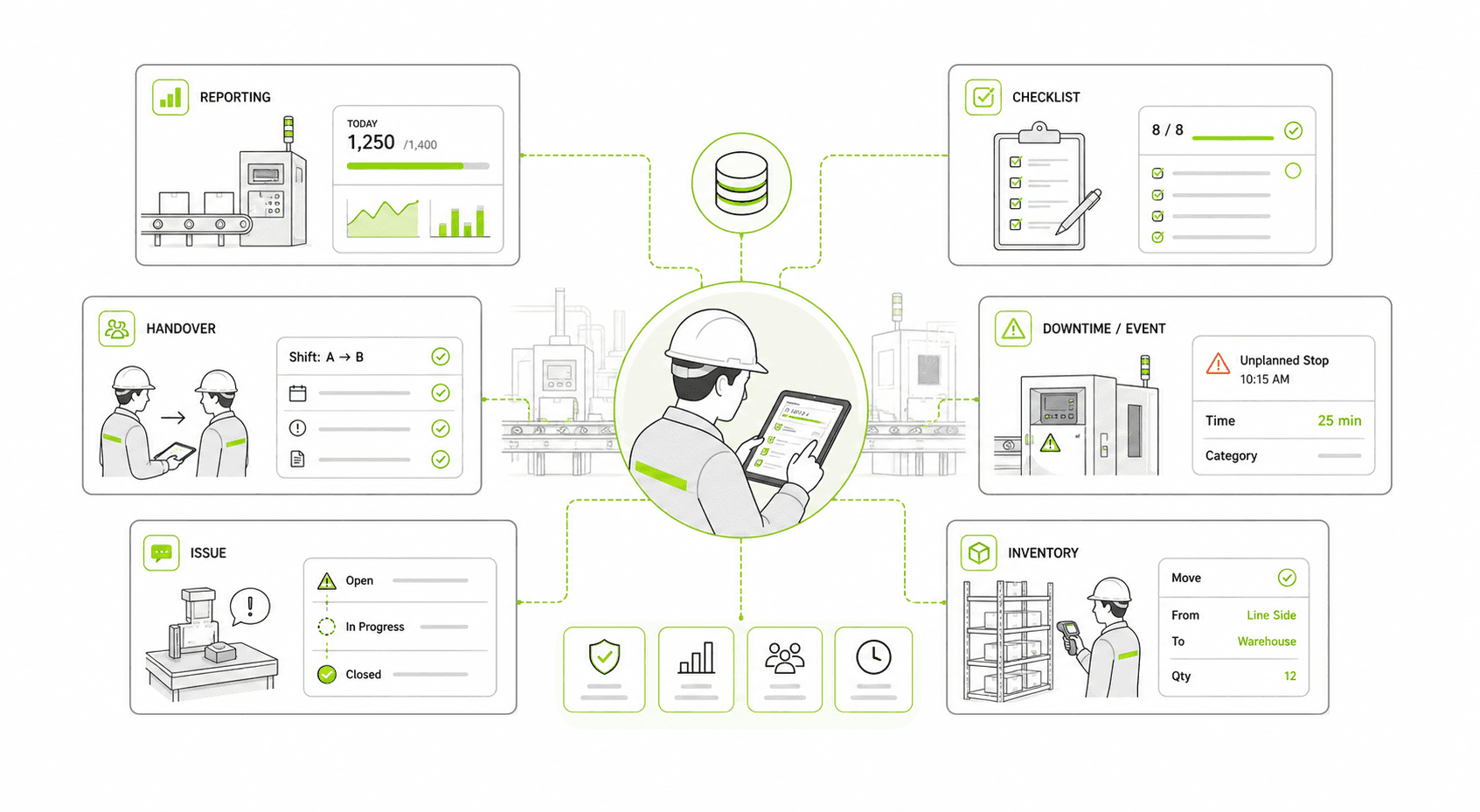
A practical shopfloor digitalization program often starts with workflows such as:

  • production reporting

  • shift handover

  • inspection and checklist records

  • downtime or abnormal event capture

  • issue tracking and closure

  • inventory movement or point-of-use material recording

These are high-frequency activities close to the point of execution. They are often good digitalization candidates because the pain is visible and the return on better structure is immediate.
What successful shopfloor digitization looks like

Good shopfloor digitalization should make work clearer, not more complicated. Operators should know what to record. Supervisors should know what is pending. Managers should be able to see execution status without chasing updates manually.

That usually means:

  • simpler data entry

  • clearer responsibilities

  • better mobile accessibility

  • automatic timestamps and history

  • easier reporting and review

  • fewer disconnected records

What to avoid

Shopfloor digitalization should not begin by forcing a large platform story onto users who just need one process fixed. It should also not stop at superficial digitization where paper is merely copied onto a screen without improving ownership, status, or traceability.

The right first step is usually one narrow but meaningful workflow that can be improved quickly and then used as a template for expansion.

Why Tier0 matters here

Tier0’s opportunity is to help teams launch shopfloor applications quickly while keeping an eye on future consistency. That is valuable because shopfloor improvement often expands one workflow at a time. Without structure, those apps become fragmented. With too much complexity, they never launch. The right balance is practical speed with enough data discipline to support reuse later.


Final takeaway

Shopfloor digitalization is the practical digitization of daily frontline manufacturing workflows. The best starting points are simple, frequent, visible processes where better records and better coordination can create value quickly.
FAQ

Does shopfloor digitalization require a full MES project?

What is the best first workflow?

Should we digitize everything at once?


If you want to improve one shopfloor workflow without launching a heavyweight project, let’s identify the best first use case.

Recent blogs

  • Product

    Tier0 vs MQTT Brokers (EMQX, HiveMQ): Why a Broker Is Necessary But Not Sufficient

    May 26, 2026

    Product

    Tier0 vs Ignition: Two Paradigms - SCADA Engineering vs UNS + Natural-Language Generation

    May 25, 2026

    Product

    Tier0 vs United Manufacturing Hub: Open-Source Infrastructure or Productized UNS Application Delivery?

    May 22, 2026

    Product

    Tier0 vs HighByte: Industrial DataOps Component or Full-Stack UNS Platform with AI-Generated Apps?

    May 21, 2026

    UNS

    The Full-Stack UNS Platform: From Data Foundation to UNS-Native Applications

    May 20, 2026

    Partner

    Tier0 × EMQX: Building a Real-Time Data Foundation for Industrial AI

    May 19, 2026

    UNS

    What is Unified Namespace (UNS)?

    May 6, 2026

    Product

    What is an Industrial App Platform?

    May 7, 2026

    Use Cases

    What is Lightweight Digitalization?

    May 8, 2026

    Use Cases

    From Excel to System: What Changes?

    May 7, 2026

    Use Cases

    What is Shopfloor Digitalization?

    May 7, 2026

    AI

    Reinventing Industrial Software

    Apr 18, 2026

    UNS

    UNS – The Sole Key to Industrial Digitalization

    Oct 10, 2024

    AI

    Lightweight Multimodal Models for Edge-Based Defect Detection

    Sep 23, 2024

    AI

    Discrete-Event Simulation + Reinforcement Learning

    Sep 9, 2024

    Integration

    MING & Modern IIoT

    Aug 21, 2024

    UNS

    Revolutionize Industrial Data Integration: The UNS Approach

    Feb 7, 2024

  • Product

    Tier0 vs MQTT Brokers (EMQX, HiveMQ): Why a Broker Is Necessary But Not Sufficient

    May 26, 2026

    Product

    Tier0 vs Ignition: Two Paradigms - SCADA Engineering vs UNS + Natural-Language Generation

    May 25, 2026

    Product

    Tier0 vs United Manufacturing Hub: Open-Source Infrastructure or Productized UNS Application Delivery?

    May 22, 2026

    Product

    Tier0 vs HighByte: Industrial DataOps Component or Full-Stack UNS Platform with AI-Generated Apps?

    May 21, 2026

    UNS

    The Full-Stack UNS Platform: From Data Foundation to UNS-Native Applications

    May 20, 2026

    Partner

    Tier0 × EMQX: Building a Real-Time Data Foundation for Industrial AI

    May 19, 2026

    UNS

    What is Unified Namespace (UNS)?

    May 6, 2026

    Product

    What is an Industrial App Platform?

    May 7, 2026

    Use Cases

    What is Lightweight Digitalization?

    May 8, 2026

    Use Cases

    From Excel to System: What Changes?

    May 7, 2026

    Use Cases

    What is Shopfloor Digitalization?

    May 7, 2026

    AI

    Reinventing Industrial Software

    Apr 18, 2026

    UNS

    UNS – The Sole Key to Industrial Digitalization

    Oct 10, 2024

    AI

    Lightweight Multimodal Models for Edge-Based Defect Detection

    Sep 23, 2024

    AI

    Discrete-Event Simulation + Reinforcement Learning

    Sep 9, 2024

    Integration

    MING & Modern IIoT

    Aug 21, 2024

    UNS

    Revolutionize Industrial Data Integration: The UNS Approach

    Feb 7, 2024